Techniques
Specialty inks: puff, high density, metallic and more
Screen-printing inks that add relief, shine or a light effect. They behave differently on each fabric, so each one is tested on the sample.
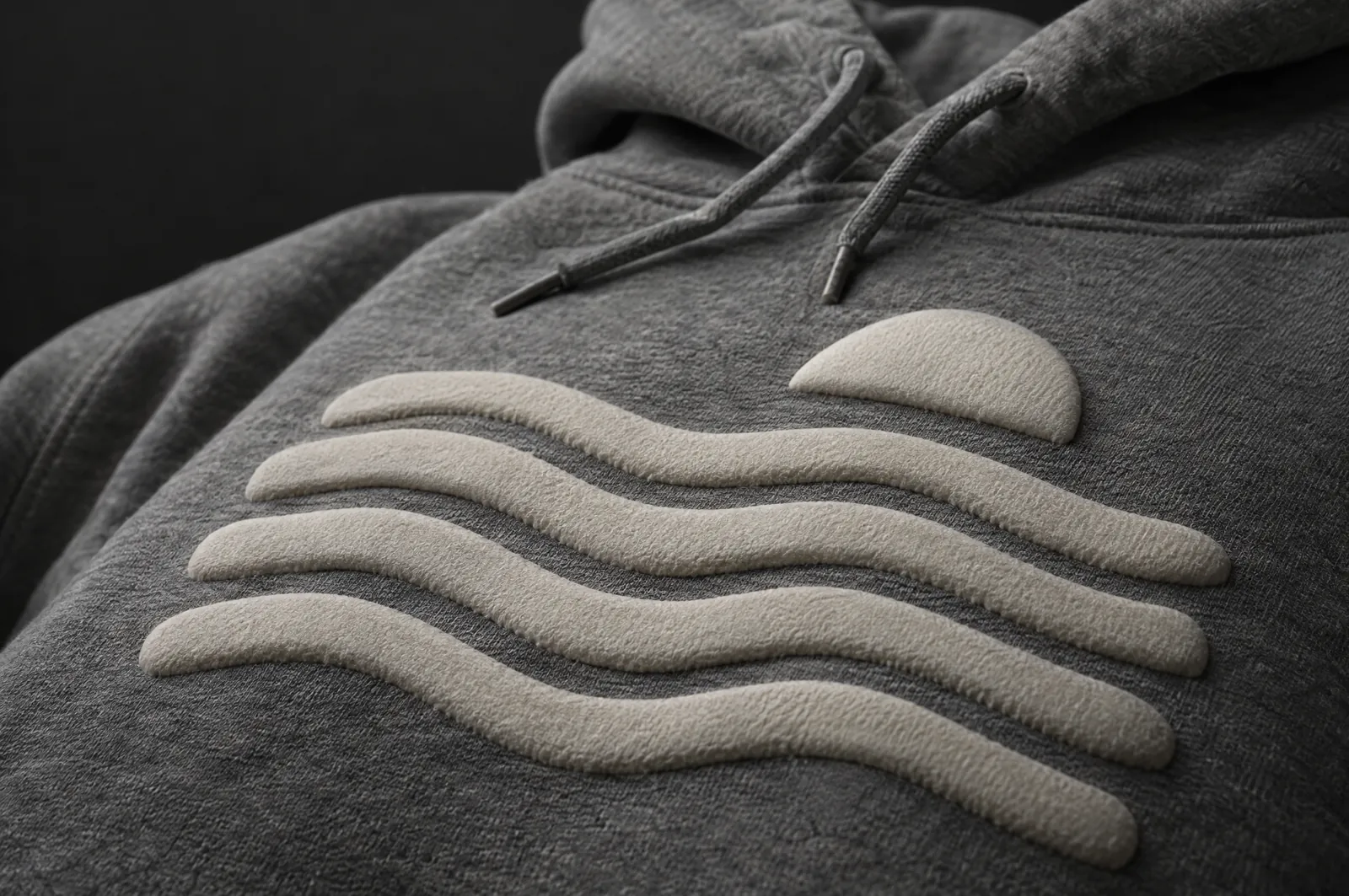
- 100 pieces
- Minimum per style, confirmed by garment and technique.
- 1 to 3 colors
- Typical per design for specialty inks, combinable with plastisol.
- 2 mm
- Minimum line weight for puff, as an industry rule.
- On the sample
- Relief, shine and effect are approved on the physical garment, not on screen.
Before you choose.
They are screen printing: the same screen and color rules apply.
- They work best on logos, bold lettering and small to medium areas. Fine detail gets lost.
- The effect fades with washing and friction: relief flattens and shine dulls. That is why they are all washed inside out and cold.
- The general color and registration rules are in Screen printing.
Whatever the technique, you approve two things before production: the artwork on a mockup and a physical sample. The full process is in How we work.
Puff
An ink with an additive that expands with the heat of curing and leaves the design raised, with a spongy texture.
- Use it when
- Logos, bold lettering and elements you want people to feel. Very common in streetwear.
- Skip it when
- The design has thin lines, small type or lots of detail: the expansion fills them in.
- Garments and fabrics
- Cotton and blends: tees, sweatshirts and hoodies.
- Colors
- Few: usually 1 to 3 puff colors, combinable with regular plastisol. Very large puff areas feel heavy and stiff.
- Hand feel
- Soft, spongy relief.
- Durability and care
- Good, but the relief flattens over time and with friction. Wash inside out, cold, no hot dryer.
High density
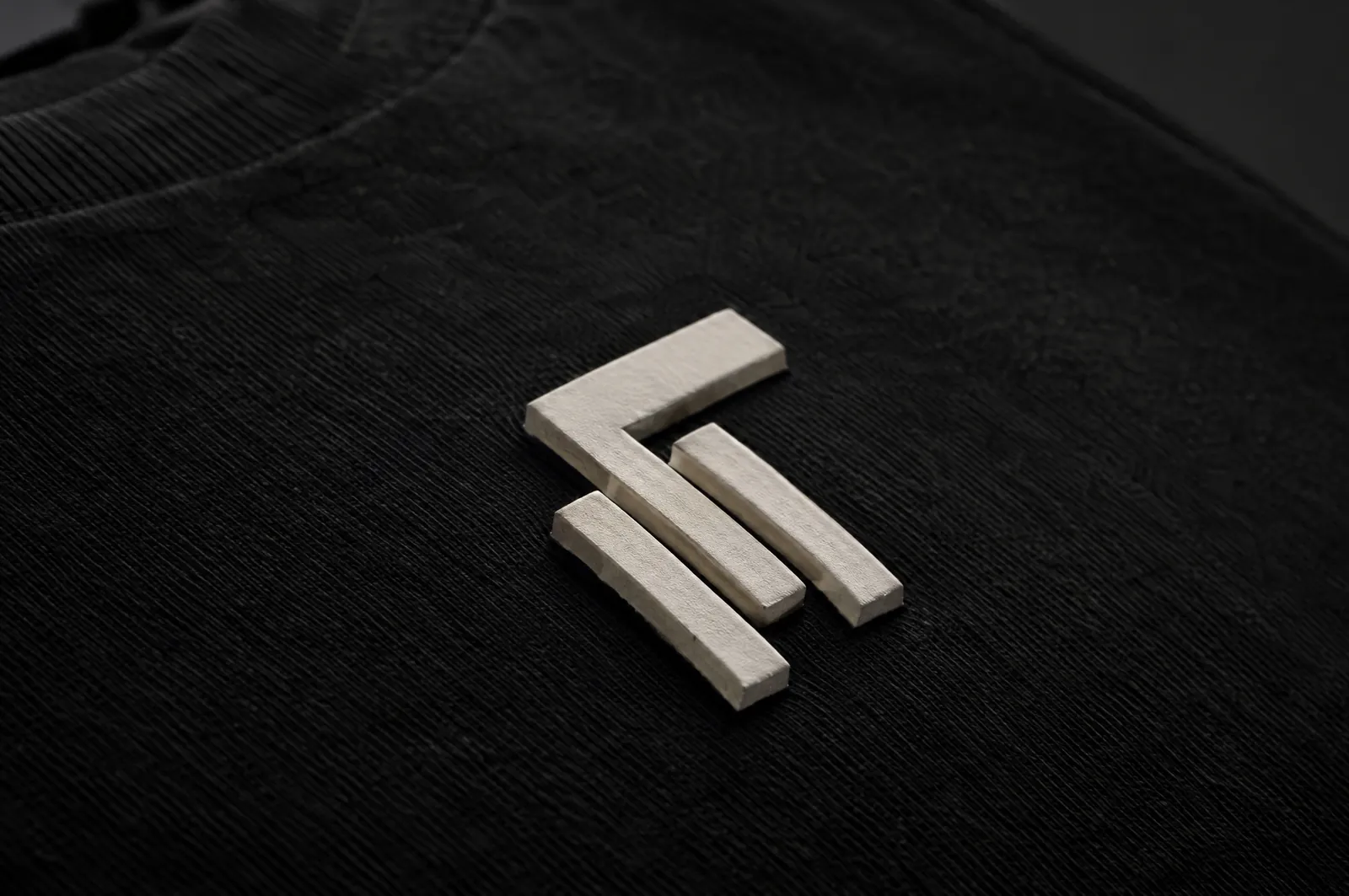
Plastisol laid down in several thick layers with a special stencil to build a relief with straight, crisp edges, not spongy like puff.
- Use it when
- Logos or type with a molded, rubber-like look that reads and feels premium.
- Skip it when
- Large designs, lots of detail or gradients.
- Garments and fabrics
- Cotton and blends with body; best on mid to heavyweight garments. It works best in small and medium areas, like a chest logo.
- Colors
- Few, usually 1 to 3.
- Hand feel
- Firm, rubbery relief.
- Durability and care
- Good. Wash inside out, cold; do not iron.
Metallic
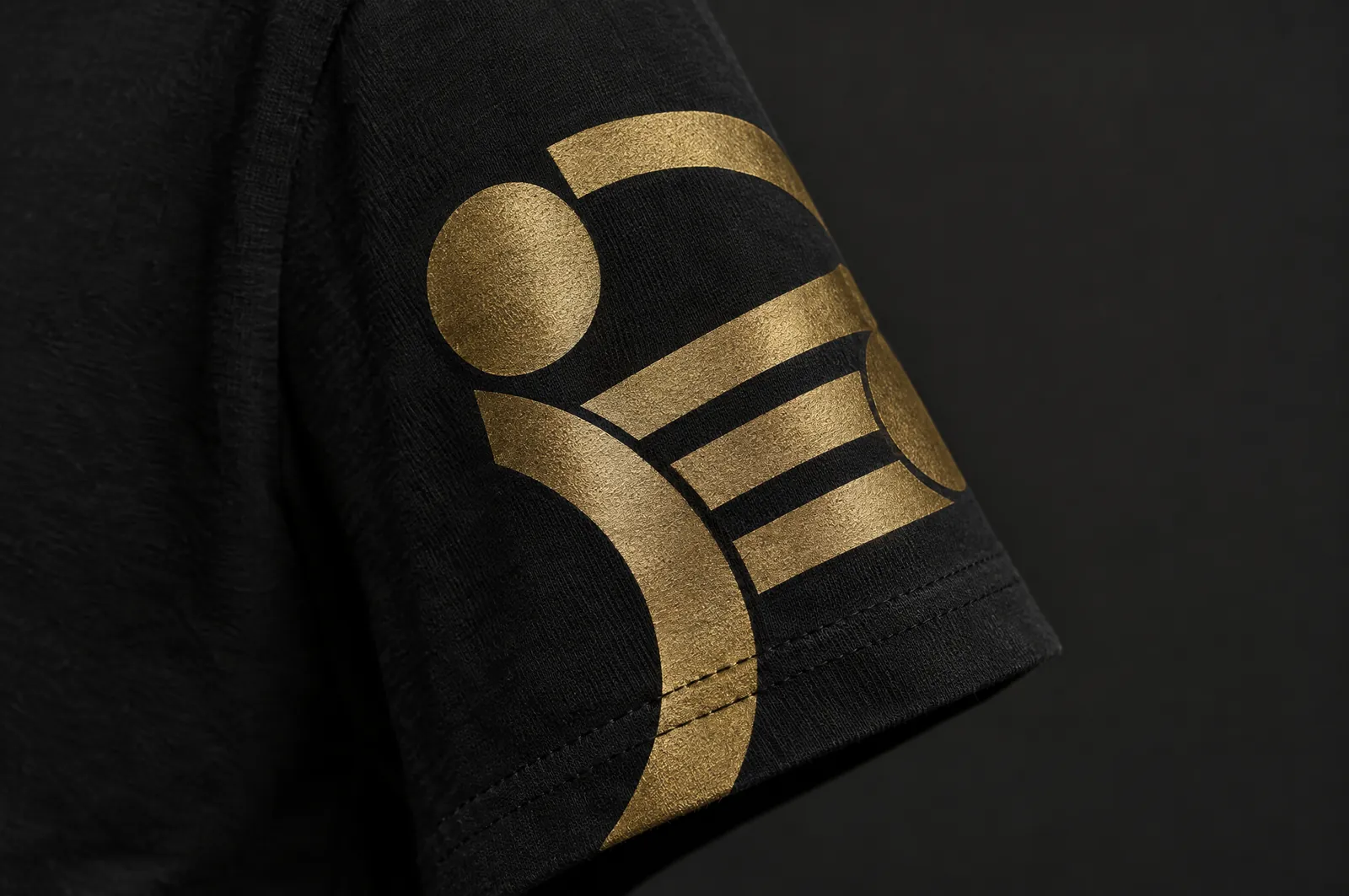
Ink with metallic pigments (gold, silver, copper) that gives a metal-like sheen.
- Use it when
- Details, logos and special editions where the shine is part of the design.
- Skip it when
- You need a mirror shine: metallic ink looks satin. For mirror, foil is the better fit.
- Garments and fabrics
- Cotton, polyester and blends.
- Colors
- Usually 1 or 2 metallics, combinable with plastisol.
- Hand feel
- Similar to plastisol, sometimes a little stiffer.
- Durability and care
- The shine fades with washing. Wash inside out, cold, no hot dryer.
Glitter
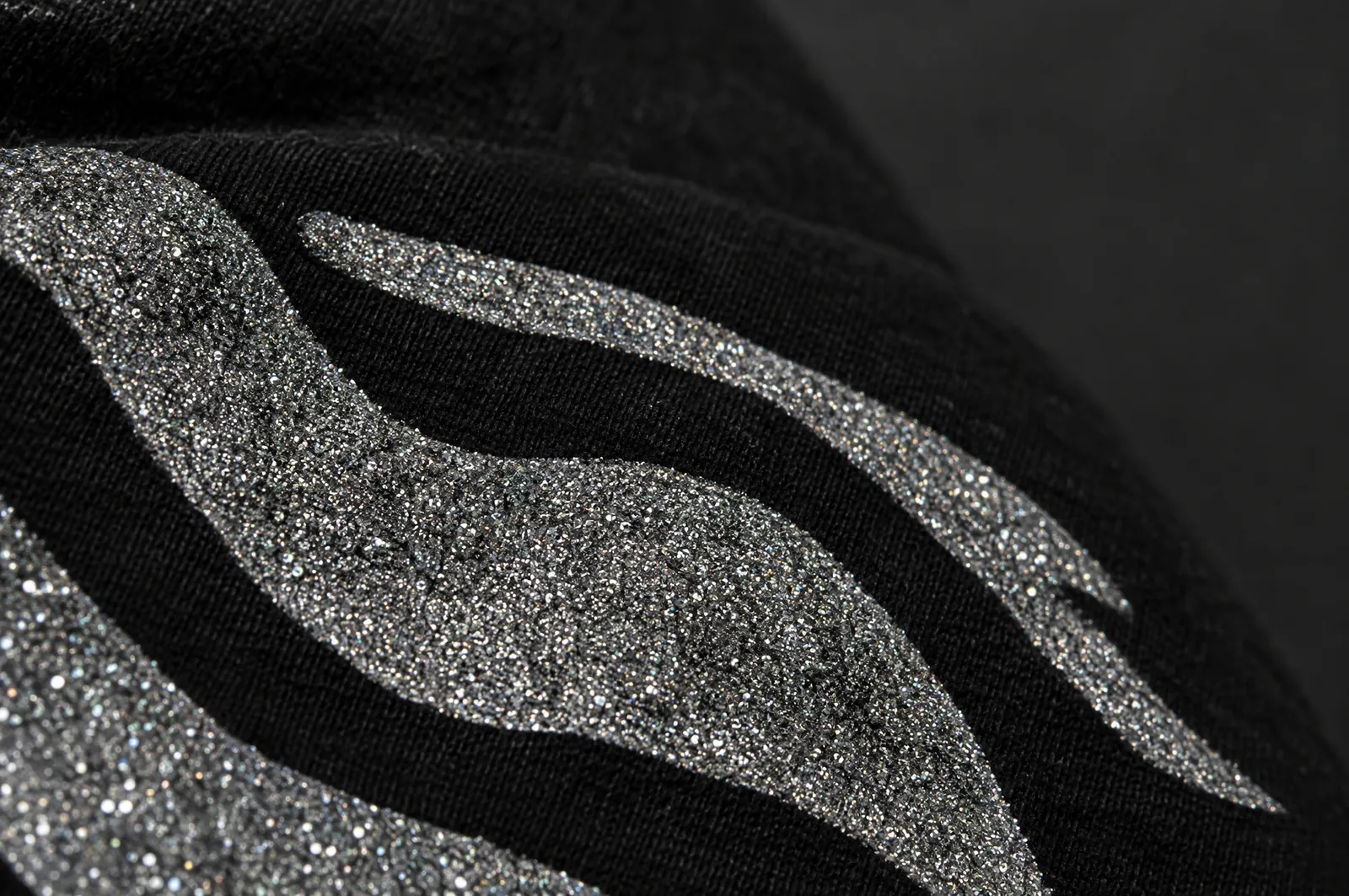
Ink with glitter particles that sparkle in the light.
- Use it when
- Special editions, details and designs meant to stand out on stage.
- Skip it when
- Fine detail or small type: the particle is coarse and does not hold sharp edges.
- Garments and fabrics
- Cotton and blends.
- Colors
- Usually 1 or 2.
- Hand feel
- Rough, with a light relief.
- Durability and care
- Good; it may shed a few particles at first. Wash inside out, cold, by hand or on a delicate cycle.
Reflective
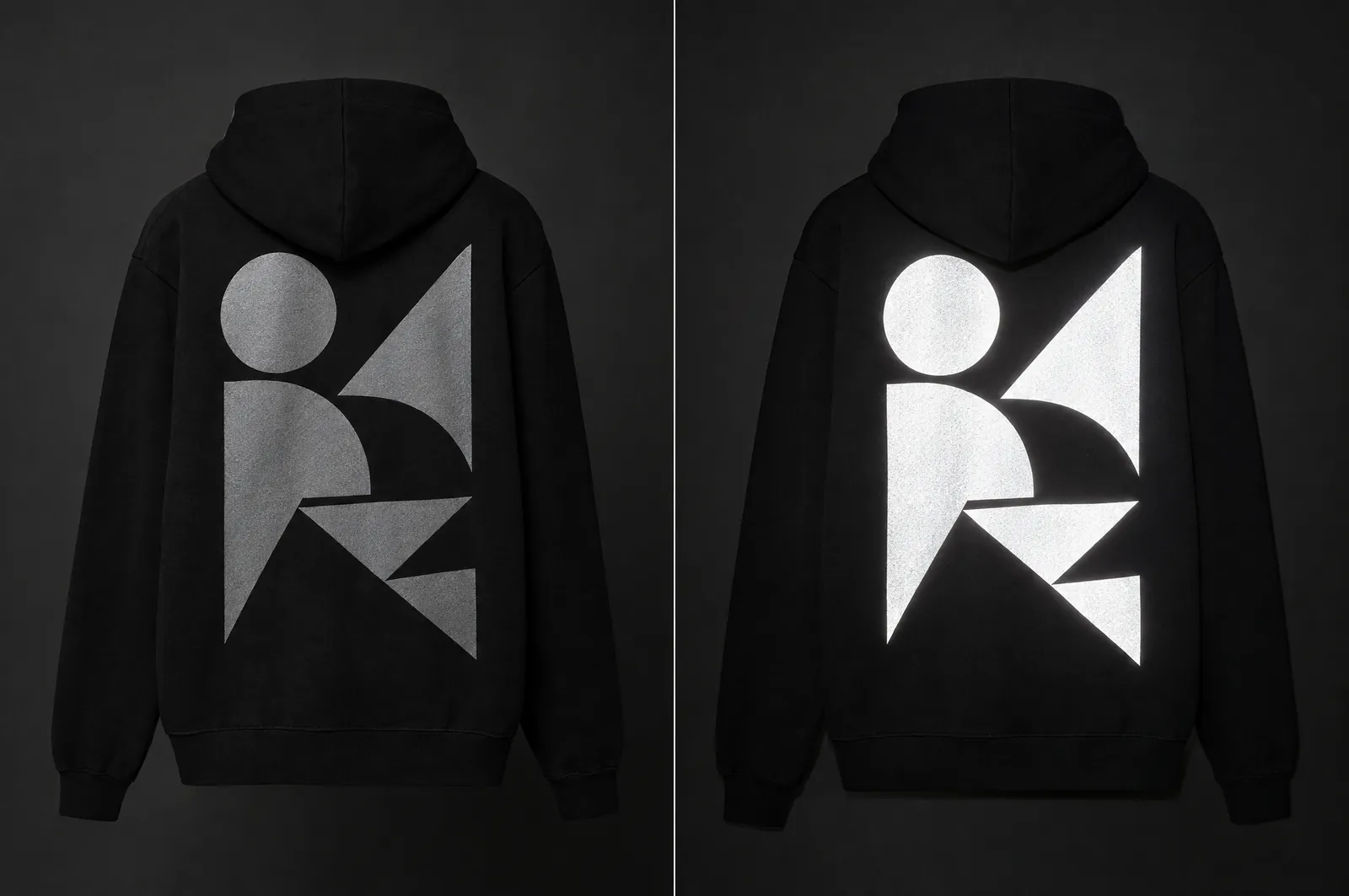
Ink with glass microbeads that bounces light back toward its source: it looks normal by day and lights up under a camera flash or headlights.
- Use it when
- Tour merch shot with flash, night or sportswear, hidden details.
- Skip it when
- You need the garment certified as safety gear: that is a different standard and a different product.
- Garments and fabrics
- Cotton, polyester and blends.
- Colors
- Usually 1 (silver grey), sometimes over a color base.
- Hand feel
- Similar to plastisol.
- Durability and care
- Reflectivity drops with washing and friction. Wash inside out, cold, no fabric softener.
Glow in the dark
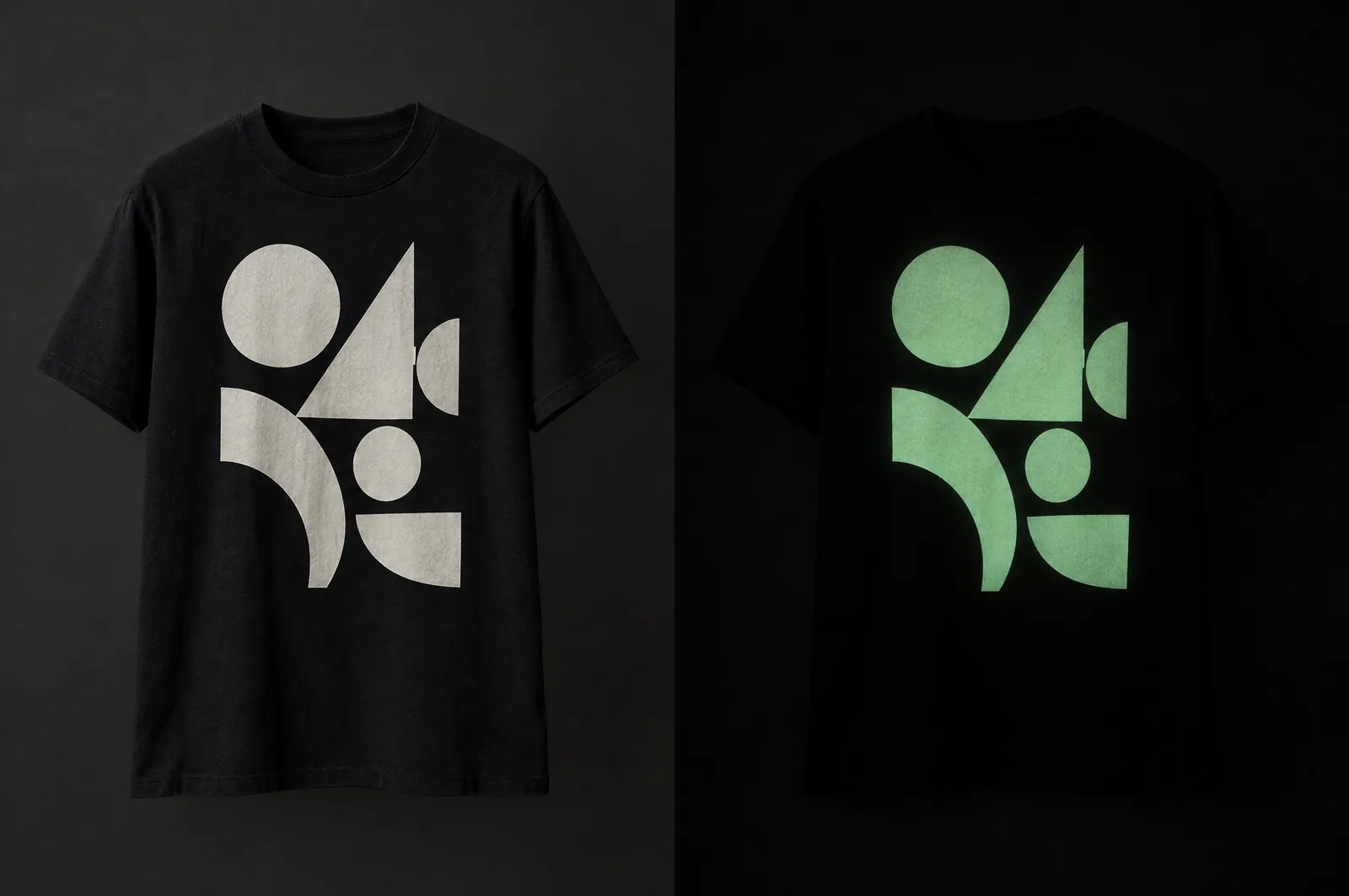
Ink that absorbs light and releases it in the dark for a while. By day it looks almost white or greenish.
- Use it when
- Concerts, festivals and special editions where the in-the-dark effect is part of the concept.
- Skip it when
- The daylight color matters a lot: glow ink is pale.
- Garments and fabrics
- Cotton and blends; best on dark garments so the contrast shows.
- Colors
- Usually 1 glow color, combinable with regular plastisol.
- Hand feel
- A layer somewhat thicker than plastisol.
- Durability and care
- The glow lasts less after washing. Wash inside out, cold.
FAQ
How thin can a puff line be?
It depends on the ink and the mesh. As an industry rule, avoid lines under 2 mm. We check it on the sample.
What is the difference between puff and high density?
Puff expands and ends up rounded and spongy. High density is built in layers and ends up with straight, firm edges.
Can you match a Pantone gold?
We look for the closest metallic ink, but metal does not match exactly like a flat color. We approve it on the sample.
Does glitter fall off?
With proper curing it stays put. It is normal for it to shed a little in the first few washes.
Does it work as a safety vest?
No. It is a design effect, not certified protective equipment.
How long does it glow?
It depends on the ink and how much light it got beforehand. We measure it on the sample.
Tell us what you want to make.
Garments, quantities per style, the technique you have in mind and your date. With that we tell you what fits and quote firm.