Techniques
Screen printing for merch and brand clothing
We push ink through a stretched mesh, the screen, that only lets color through where the design is. There is one screen per color.
- 100 pieces
- Minimum per style, confirmed by garment and technique.
- 1 screen
- Per color in the design. Dark garments add a white underbase.
- ±1 mm
- Color-to-color registration we check on the sample and the run.
- Express
- Screen printing or DTF are the only techniques available on express, on plain stock garments.
What applies to all of them.
Four rules that hold for any screen-printing ink.
- One screen per color. On dark garments we almost always print a white underbase first so colors do not go dull; you do not have to draw it.
- We approve color against Pantone C on the artwork and against the physical sample on the garment. An ink's tone changes with the fabric color.
- Acceptance criteria: color within tolerance of the approved Pantone, no cracks when stretched, registration within ±1 mm and placement within ±0.5 cm of the tech sheet.
- For relief, shine or light effects, see specialty inks.
Whatever the technique, you approve two things before production: the artwork on a mockup and a physical sample. The full process is in How we work.
Plastisol
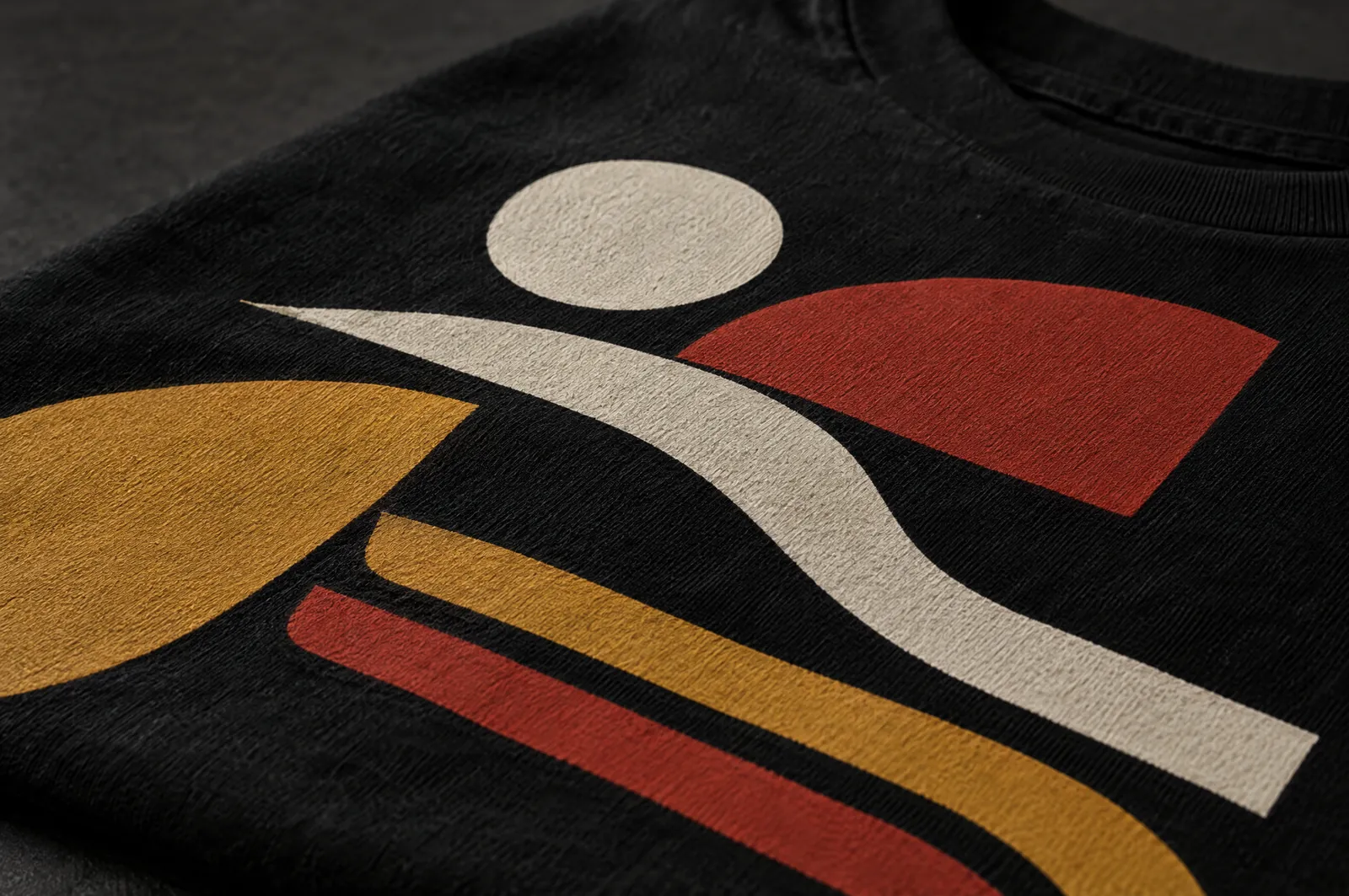
The most common ink in merch. It is a PVC ink that does not air-dry: it is cured with heat and sits as a layer on top of the fabric. It gives solid, opaque colors, even on black.
- Use it when
- You have 1 to 6 flat colors, a dark garment or very bright colors, and you want the classic tour tee look.
- Skip it when
- You want a print you can barely feel, or the design is a photo with fine gradients. Simulated process or DTG work better there.
- Garments and fabrics
- Cotton, polyester and blends: tees, sweatshirts, hoodies and totes. On polyester we use low-bleed ink so the fabric dye does not migrate.
- Colors
- One screen per color. Past 6 to 8 colors, simulated process is worth a look.
- Hand feel
- A light, slightly plastic layer. Thicker on dark garments because of the white underbase.
- Durability and care
- Very durable when properly cured. Wash inside out in cold water and do not iron over the print.
Water-based
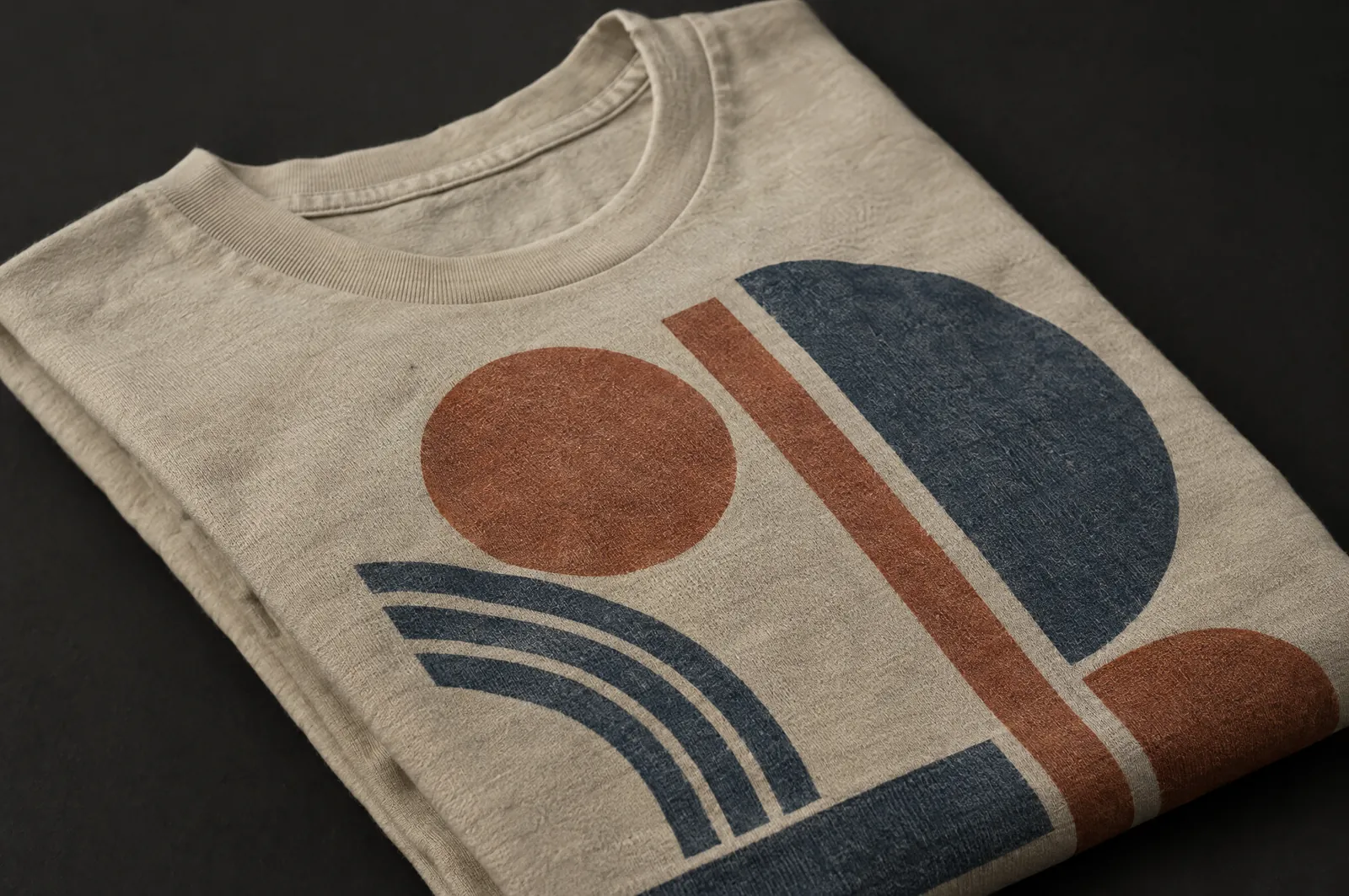
An ink that uses water as its carrier and soaks into the fiber instead of sitting on top. The result is soft, with almost no hand, and a more washed-in look.
- Use it when
- The garment is light or mid-tone cotton and you want a print you cannot feel. It is a staple of premium clothing brands.
- Skip it when
- The garment is black or very dark and you want bright colors: without an underbase or discharge, the color goes dull. Not for polyester either.
- Garments and fabrics
- Best on 100% cotton or high-cotton blends, in light colors.
- Colors
- One screen per color. Colors look more translucent than plastisol.
- Hand feel
- Very soft; it feels almost like the fabric.
- Durability and care
- Very durable: the ink becomes part of the fiber. It softens and lightens a little with washing, which many brands want.
Discharge
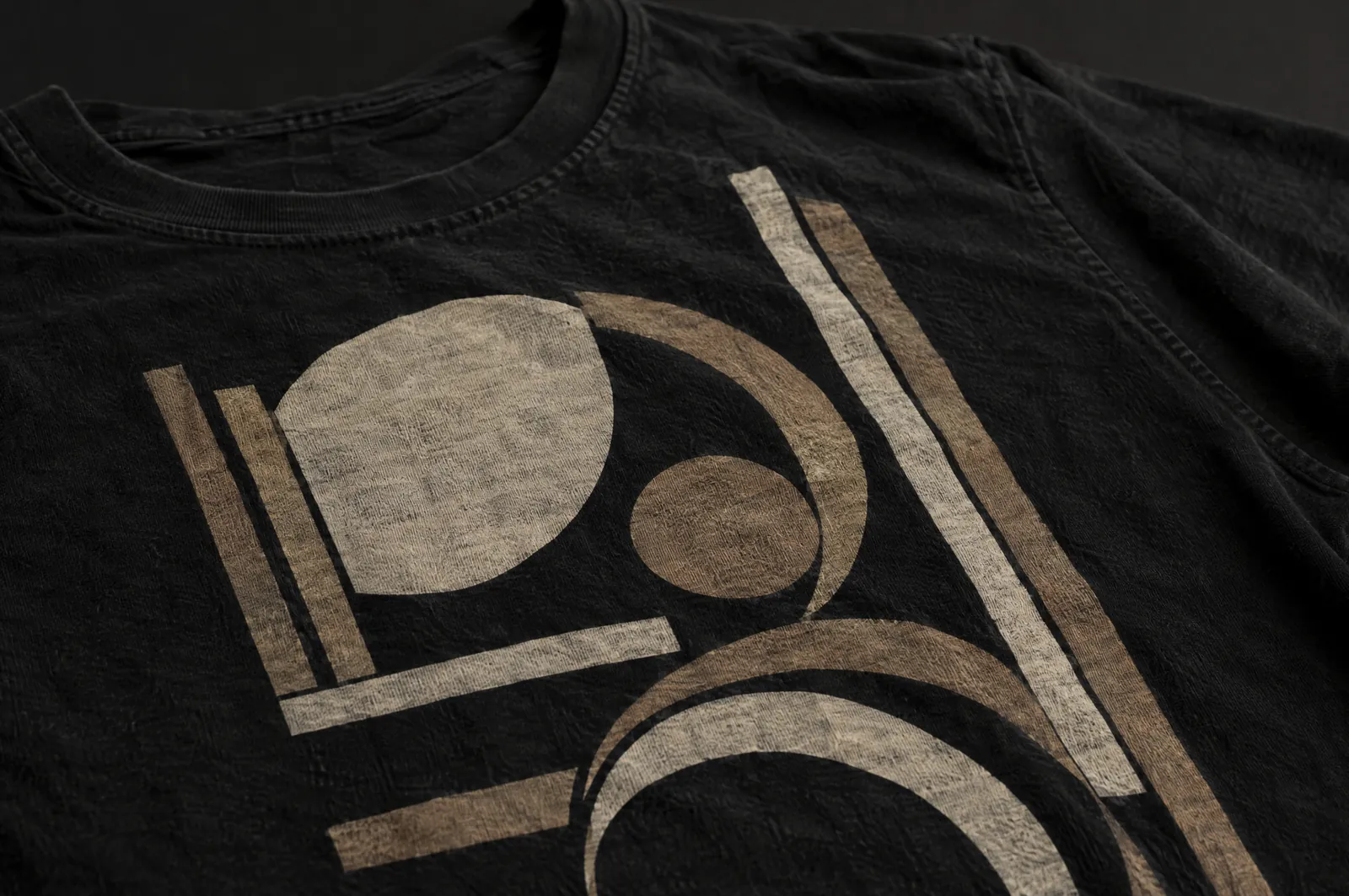
An ink that removes the dye from the fabric where it is printed and, if you want, leaves another color in its place. The print lives inside the fiber: you cannot feel it.
- Use it when
- A dark cotton garment and you want a soft print with a vintage look.
- Skip it when
- The fabric is polyester or a high-poly blend, or the exact color is critical: the result depends on the dye in each fabric lot and can vary.
- Garments and fabrics
- Only 100% cotton or with very little synthetic, dyed with dischargeable dyes. It is always tested on the actual fabric.
- Colors
- One screen per color. Colors come out slightly muted and do not match Pantone as precisely as plastisol.
- Hand feel
- None: the print has no layer.
- Durability and care
- Very durable; it is part of the fabric. Normal cold wash.
Color separation: simulated process and CMYK
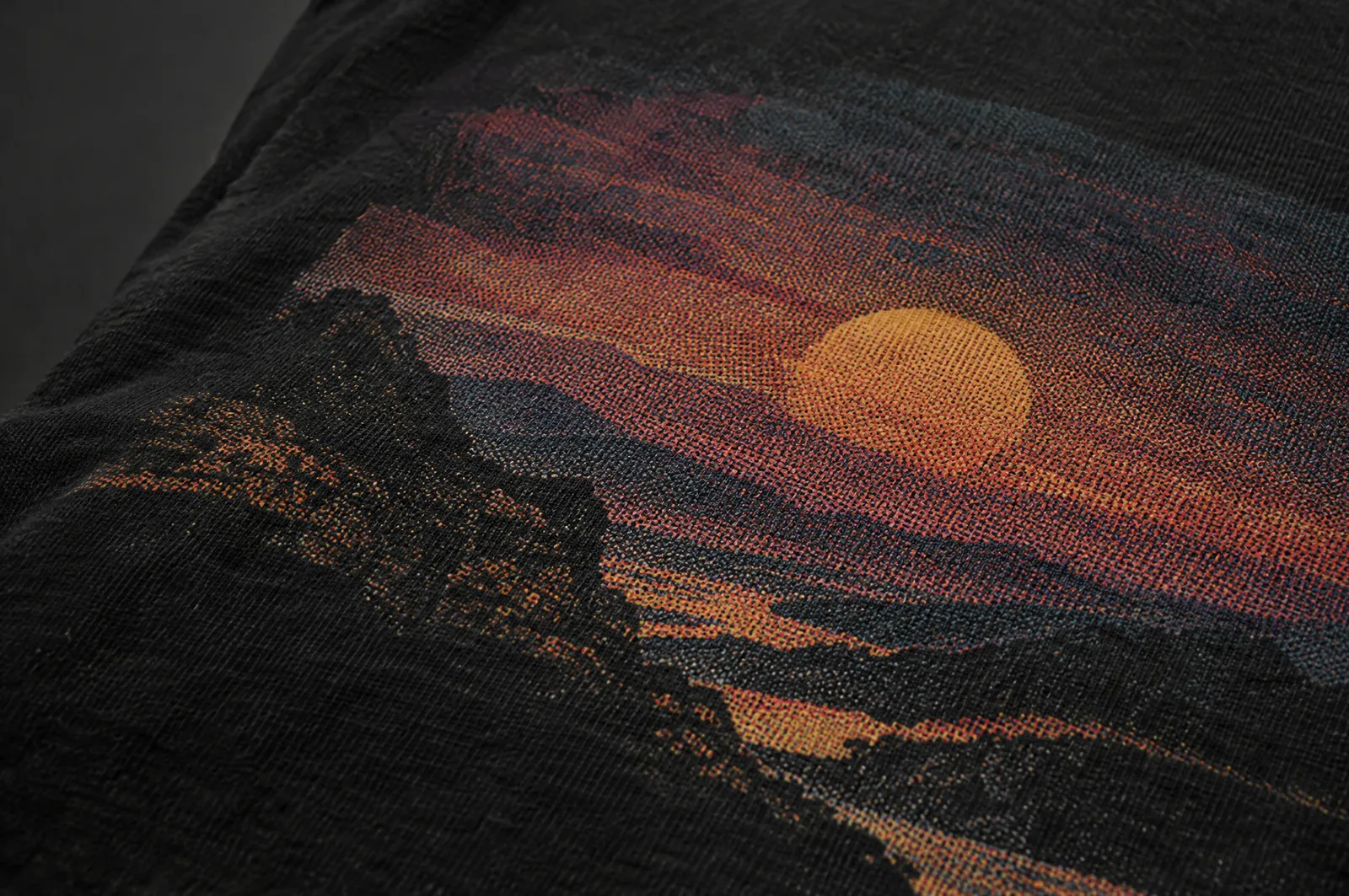
Two ways to screen print photos and illustrations with gradients using halftone dots. CMYK uses four transparent inks and works on white or light garments. Simulated process uses opaque inks over a white underbase and works on dark garments.
- Use it when
- The artwork is a photo, a painting or a shaded illustration, and the volume justifies several screens.
- Skip it when
- Few pieces per design with many colors, or artwork that is not prepared at high resolution. DTF or DTG are usually better there.
- Garments and fabrics
- CMYK: white or light garments. Simulated process: any color, on cotton or blends.
- Colors
- CMYK: 4 inks. Simulated process: usually 6 to 12 screens (industry guideline).
- Hand feel
- CMYK: soft. Simulated process: similar to plastisol.
- Durability and care
- Same as plastisol: very durable. Wash inside out, cold.
FAQ
Does plastisol crack after washing?
Not when it is properly cured. Cracking almost always comes from under-cured ink or ironing over the print. That is why we check for cracks when we stretch the sample and the production run.
Can you print water-based ink on a black tee?
Yes, but with a white underbase or combined with discharge, and the hand is no longer as soft. We test it on the sample before production.
Why did the discharge tone change between the sample and production?
Because it depends on the dye in the fabric lot. That is why we check the fabric on the floor before production and approve against the physical sample, not the screen.
Can I screen print a photo on a black tee?
Yes, with simulated process. We need the file at high resolution and we separate the colors before the sample.
Tell us what you want to make.
Garments, quantities per style, the technique you have in mind and your date. With that we tell you what fits and quote firm.