Guides
How to care for a printed or embroidered garment
What damages a print most is a hot dryer and ironing over it. The rest, by technique, is below.
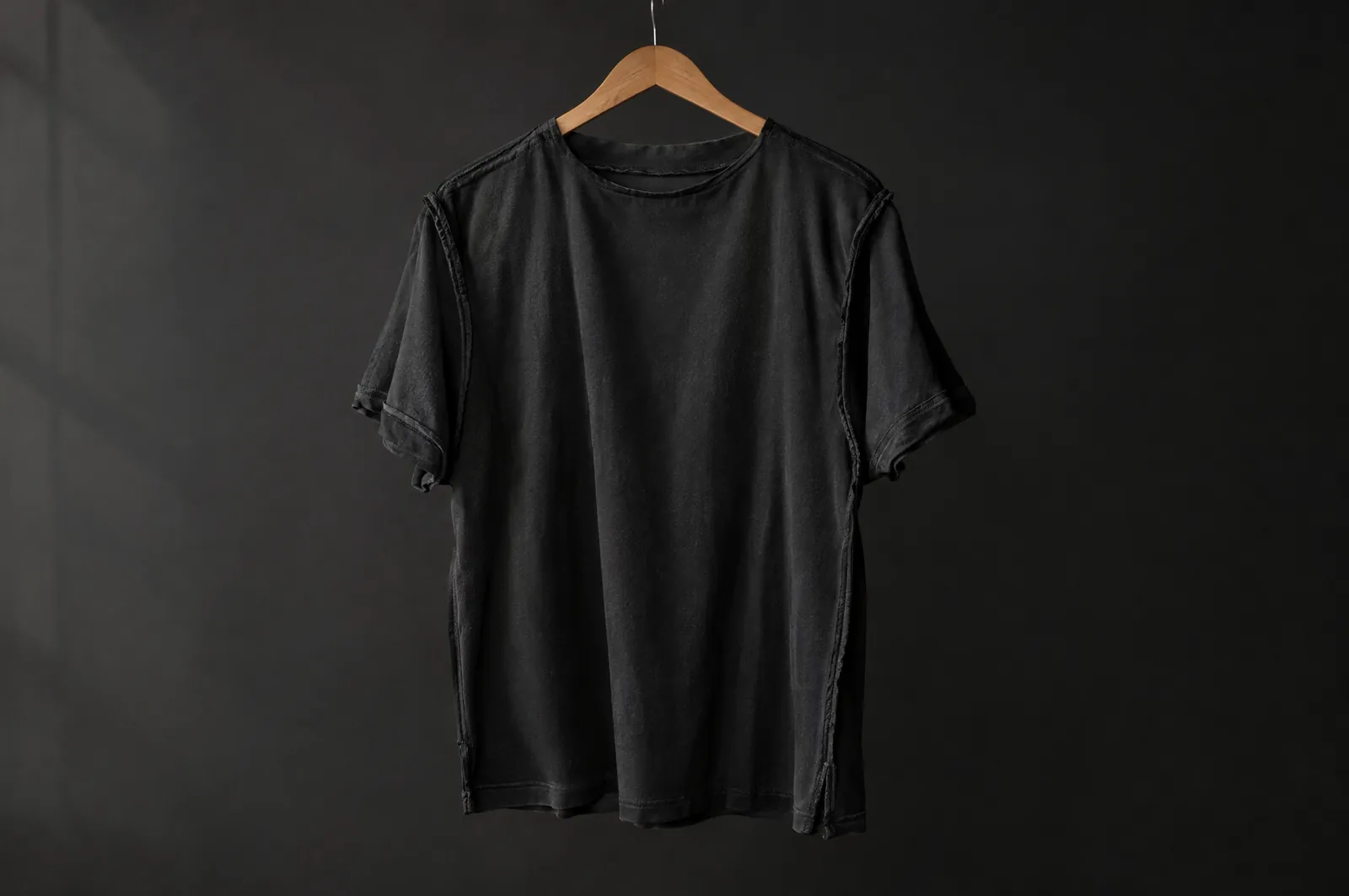
The golden rule, for everything.
General industry recommendations. Each garment's exact instructions go on its label, because they depend on the fabric and the technique together.
Wash inside out.
Cold water.
No bleach.
Air dry or tumble dry low.
Do not iron over the print, embroidery or patch.
No dry cleaning unless the label says so.
By technique.
| Technique | Washing | Drying | Ironing | Watch out for |
|---|---|---|---|---|
| Plastisol | Inside out, cold | Air or low | Not over the print | Direct heat melts or cracks it |
| Water-based | Inside out, cold | Air or low | Inside out, medium heat | It lightens a little over time: that is normal |
| Discharge | Normal, cold | Air or low | Inside out | Almost no special care |
| Puff and high density | Inside out, cold, gentle cycle | Air | No | The relief flattens with heat and friction |
| Metallic, glitter | Inside out, cold, gentle cycle | Air | No | The shine fades with washing and friction |
| Reflective, glow | Inside out, cold, no softener | Air | No | Fabric softener covers the reflectivity |
| Simulated process / CMYK | Inside out, cold | Air or low | Not over the print | Same as plastisol |
| DTF | Inside out, cold | Air or low | Not over the print | A hot dryer lifts the edges |
| DTG | Inside out, cold | Air or low | Inside out | Colors fade somewhat after many washes |
| Sublimation | Normal, cold or warm | Air or low | Inside out, low heat | Very hot ironing can reactivate the ink |
| Vinyl, flock | Inside out, cold | Air | No | Flock wears with friction |
| Foil | By hand or inside out, cold, delicate cycle | Air | No | It is the most delicate technique |
| Screen-printed transfer | Inside out, cold | Air or low | Not over the transfer | Same as plastisol |
| Laser engraving | Per the fabric | Per the fabric | Per the fabric | Permanent |
| Tie-dye | Separately, cold, the first few times | Air | Normal | Bleeds color at first |
| Embroidery and appliqué | Inside out, cold | Air or low | Inside out, never on top | Snip loose threads, do not pull them |
| Chenille (embroidery or patch) | By hand or delicate cycle, inside out | Air | No | The loops snag |
| Sewn patches (embroidered, woven) | Inside out, cold | Air or low | Inside out | Check the patch stitching |
| PVC patch | Damp cloth or gentle wash | Air | No | Keep it away from heat |
| Leather patch | Avoid soaking | Air | No | Genuine leather changes tone with use |
| Caps | By hand, no washing machine | Air, holding its shape | No | The washer deforms the visor and front |
By finish.
- Garment dye, pigment dye and acid wash: wash separately the first few times; it may release color.
- Enzyme and washed: normal care.
- Distressed: gentle cycle, so the wear does not spread too far.
FAQ
Will my print crack?
Not if it is properly cured and cared for. What damages a print most is a hot dryer and ironing over it.
Tell us what you want to make.
Garments, quantities per style, the technique you have in mind and your date. With that we tell you what fits and quote firm.