Manufacturing
Finishes: dyes, washes, laser and tie-dye
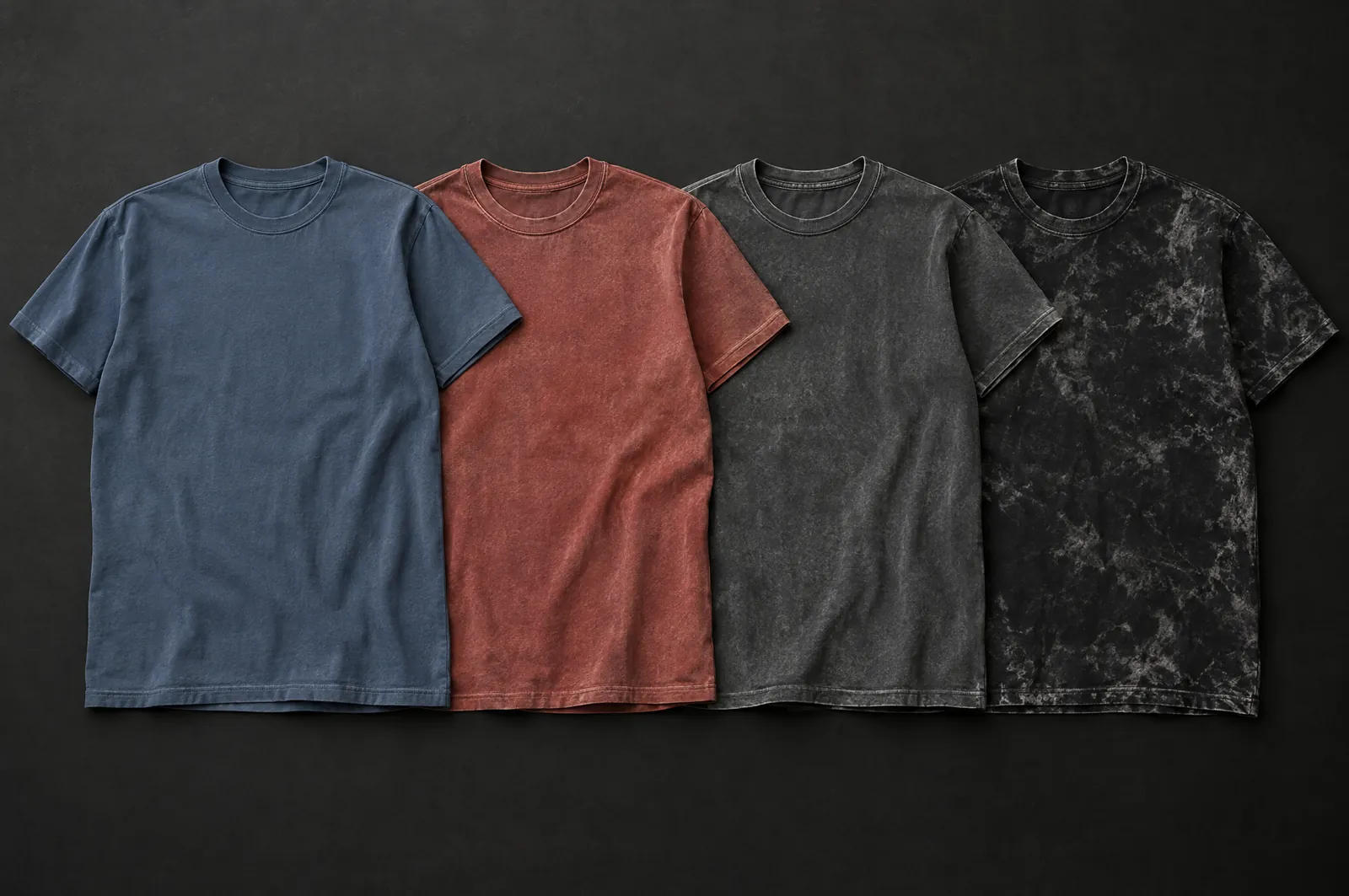
What happens to the garment so it looks lived-in, soft or one of a kind. Everything is approved on the sample, because every piece varies a little.
- No express
- Express means plain stock garments, with no dyeing or washing.
- 100 pieces
- Minimum per style, confirmed by garment and technique.
- Variation
- Color varies slightly between pieces and lots: it is part of the process.
- Physical sample
- The color and hand reference is the approved sample.
What a finish is.
A process applied to the fabric or the sewn garment that changes its color, hand or look.
Several happen after sewing and sometimes after printing. The order is set in the tech sheet and tested on the sample. Some finishes need a larger minimum fabric lot; we tell you when we quote.
Garment dye
We sew the garment undyed and dye it once it is assembled. The color goes deeper, with soft variations at the seams, and the garment comes out softer.
- Use it when
- Clothing brands that want their own color and a lived-in, premium look.
- Skip it when
- You need every piece in the identical tone, or the deadline is short.
- Garments
- Cotton tees, sweatshirts, hoodies and caps.
- Note
- The garment shrinks in the dye bath: the pattern is adjusted beforehand. If the print goes on before dyeing, the ink gets dyed too; it is tested on the sample. Dyeing to your own Pantone requires a minimum fabric lot and adds weeks.
Pigment dye
A pigment dye that stays on the surface of the fiber. It wears down with washing on purpose and gives a washed-out look, like a well-loved old garment.
- Use it when
- Collections with a vintage or sun-faded look.
- Skip it when
- You want the color to stay the same over time.
- Garments
- Cotton tees, sweatshirts, hoodies and caps.
Acid wash
A stone or chemical wash that lightens the garment in patches, with strong contrast. It is the denim and tee look of the eighties.
- Use it when
- Retro, metal, rock and streetwear editions.
- Skip it when
- You want an even color.
- Garments
- Cotton tees and sweatshirts in dark colors; denim.
Enzyme wash
A wash with enzymes that removes fuzz from the cotton surface and leaves the fabric softer, with a light worn-in touch.
- Use it when
- You want the garment to feel worn-in and soft from day one.
- Skip it when
- The deadline is short: it adds a process.
- Garments
- Cotton tees, sweatshirts and denim.
Washed and distressed
Two wear effects. Washed: lightens the garment evenly, as if it had been through many washes. Distressed: adds physical wear (ripped edges, holes, fraying) by hand or with a laser.
- Use it when
- Collections with a vintage, tour-worn or heritage look.
- Skip it when
- The garment is lightweight: distressing weakens it.
- Garments
- Heavyweight tees, sweatshirts, denim and caps.
Pre-shrunk
A process that makes the fabric shrink before cutting, so the garment does not change size in the first washes. Shrinkage can also be compensated in the pattern.
- Use it when
- Whenever the fabric is cotton and fit matters.
- Garments
- Every cotton garment.
Laser engraving
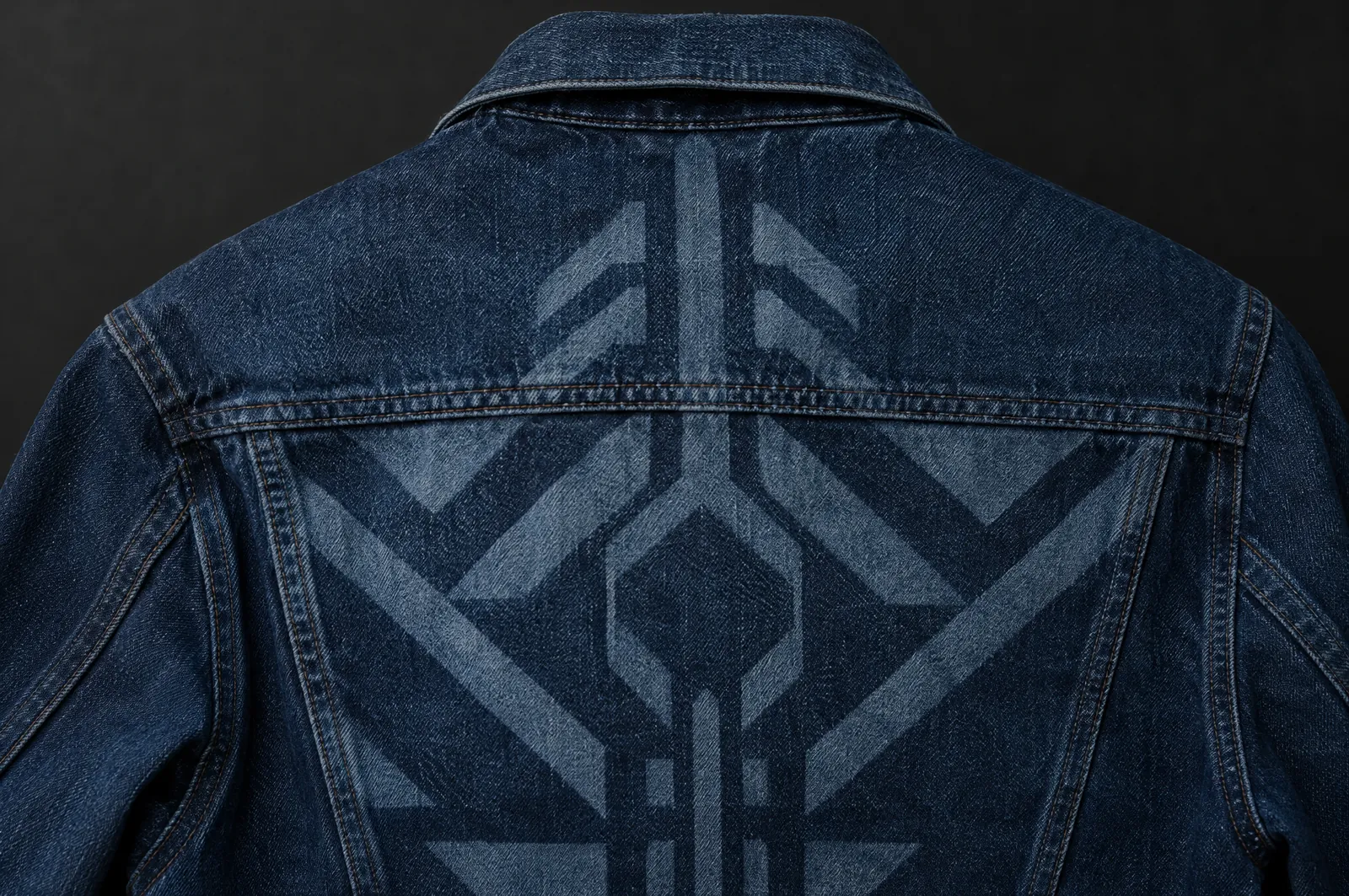
A laser burns or bleaches the surface of the material following the design. On denim it lightens the indigo; on leather it engraves the design in a darker tone.
- Use it when
- Denim, jackets, leather patches and single-tone details that must never peel.
- Skip it when
- You want color: the laser adds no ink, it only lightens or darkens the material.
- Garments
- Denim (indigo), leather and some heavy cotton fabrics. It is tested on the actual material.
- Durability and care
- Permanent. On denim the contrast softens with washing, like the rest of the fabric.
Tie-dye
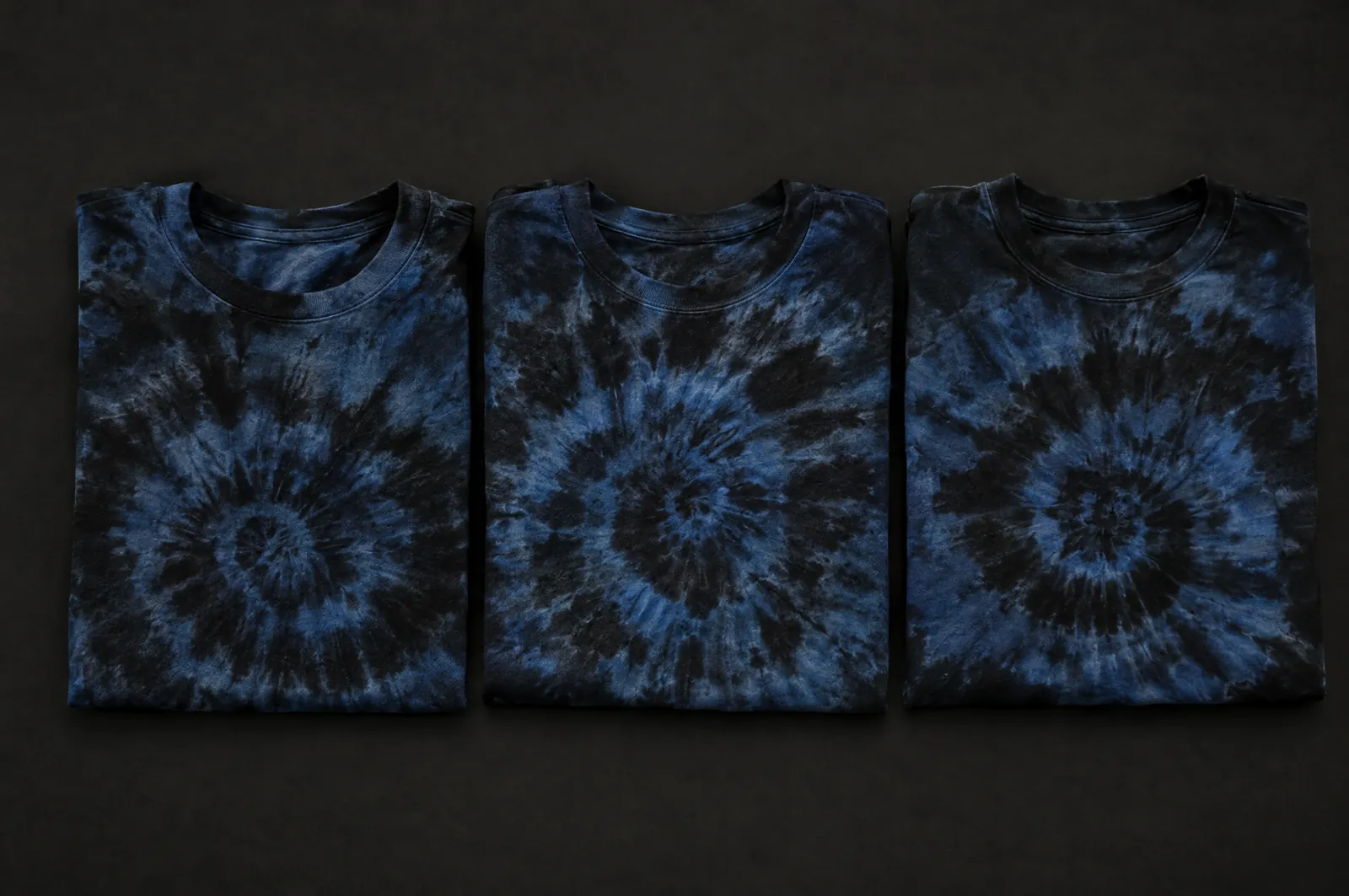
We tie, fold or twist the garment and dye it in sections. Every piece comes out different from the rest, even when the same pattern is followed.
- Use it when
- Festival, summer editions or drops where “no two alike” is part of the value.
- Skip it when
- You need every piece identical or an exact Pantone match.
- Garments
- 100% or near-100% cotton: tees, sweatshirts, hoodies and socks. It adds a dyeing step before printing.
- Durability and care
- It may release color in the first washes. Wash separately, cold.
FAQ
Can I dye to my own Pantone?
Yes, with a minimum lot and more time. We approve it with a lab dip and on the sample.
Does pigment dye bleed?
Yes, little by little, and it can stain other garments in the first washes. That is why it is washed separately.
Do all acid wash pieces come out the same?
No. Each piece has its own pattern; we approve a range on the sample.
Does enzyme wash change the color?
It lightens it a little. You see it on the sample before production.
Do distressed holes get bigger?
A little with wear, like any distressed garment. We finish them so they do not spread too far.
Does the laser weaken the fabric?
Not when it is properly calibrated. That is why it is tested on the sample with the actual denim from the lot.
Do all tie-dye pieces come out the same?
No, and that is the point. We approve a pattern and a range of variation on the sample.
Tell us what you want to make.
Garments, quantities per style, the technique you have in mind and your date. With that we tell you what fits and quote firm.