Techniques
Embroidery for caps, sweatshirts and jackets
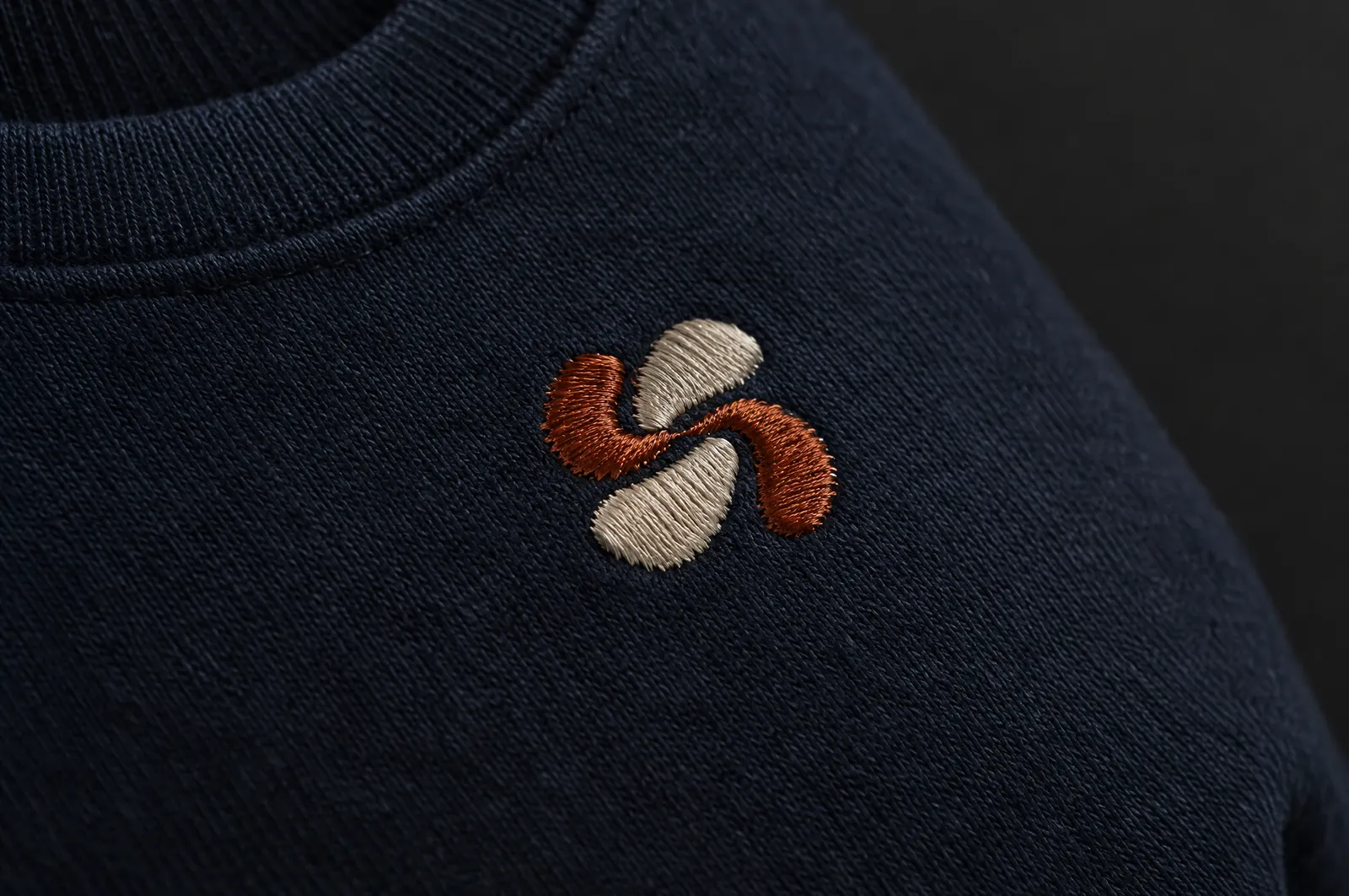
Your logo stitched in thread. It is the most premium option and the longest-lasting: it usually outlives the garment.
- 100 pieces
- Minimum per style, confirmed by garment and technique.
- 12 to 15 colors
- Threads per pass on commercial machines (industry guideline).
- 5 mm
- Minimum letter height; lines at least 1 mm (industry rule).
- No express
- Embroidery and patches run on the standard or premium calendar.
What applies to all of them.
Digitizing, thread and minimum detail.
- Before embroidering, the design is converted into a stitch file: digitizing. Whether the embroidery looks clean depends on that file.
- Colors are counted by thread color and approved against the thread chart and on the sample, not against a Pantone on screen.
- As an industry rule, lettering at least 5 mm tall and lines at least 1 mm. Anything smaller fills in.
Whatever the technique, you approve two things before production: the artwork on a mockup and a physical sample. The full process is in How we work.
Flat embroidery
The design is stitched with thread straight onto the garment. It is the classic way to add a logo with a premium look.
- Use it when
- Small and medium logos on the chest, caps, sleeves and back of the neck. Mid to heavyweight garments.
- Skip it when
- Very large areas on a lightweight tee (the fabric puckers and gets heavy), photos or gradients.
- Garments and fabrics
- Caps, sweatshirts, hoodies, jackets, polos, good-weight tees, totes and beanies.
- Colors
- Up to the number of needles on the machine in one pass: commercial machines run 12 to 15 (industry guideline).
- Guideline size
- Chest around 8 to 10 cm wide; back up to about 25 to 30 cm depending on the hoop (industry guideline).
- Hand feel
- A light relief; inside there is a backing you can feel.
- Durability and care
- Very durable; it usually outlasts the garment. Wash inside out, cold; do not iron over the embroidery.
3D puff embroidery
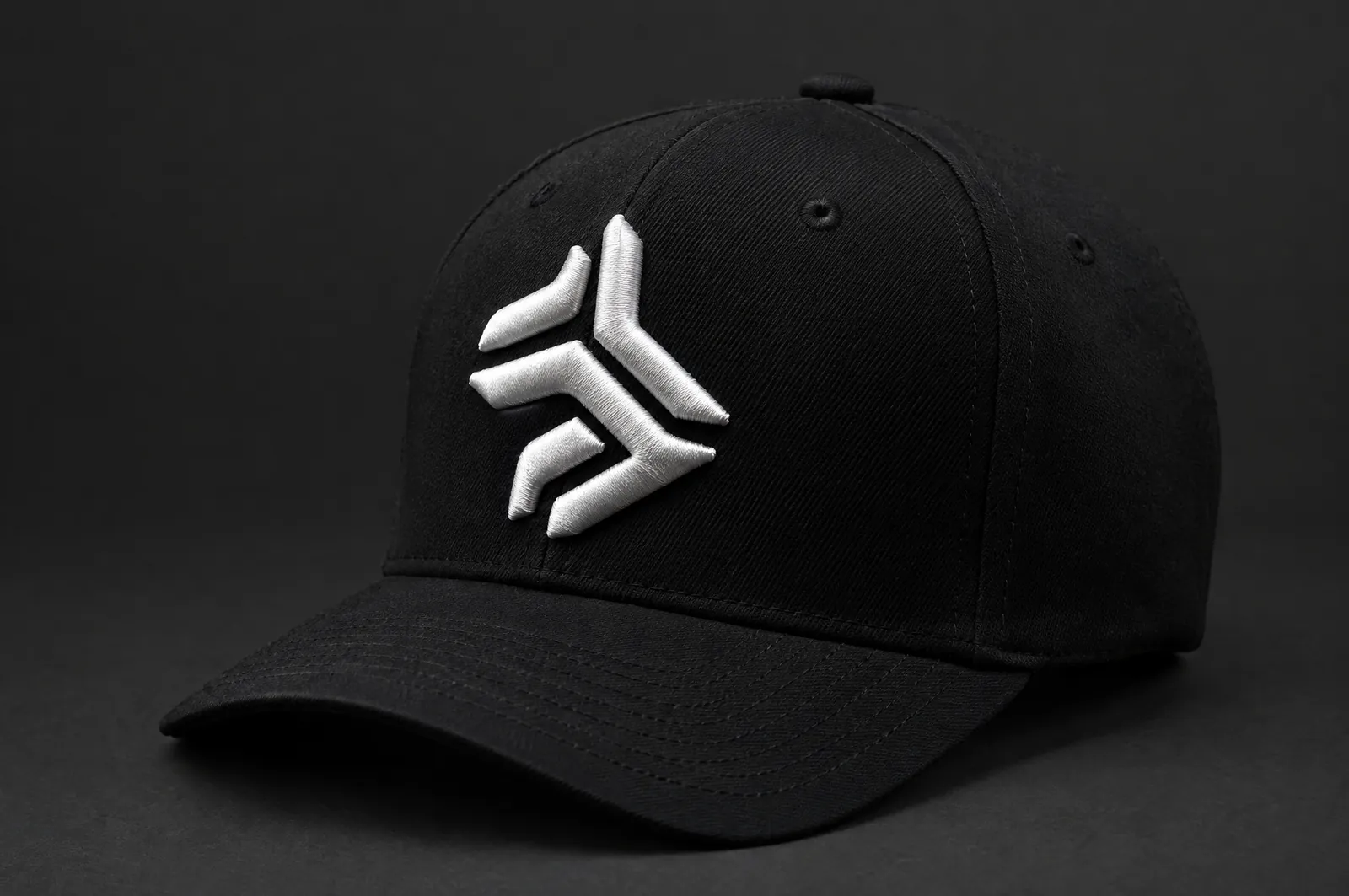
We embroider over a foam that stays inside the stitches and lifts the design into relief.
- Use it when
- Bold lettering and logos on the front of caps. It is the classic baseball cap look.
- Skip it when
- Designs with fine detail, thin lettering or very tight curves.
- Garments and fabrics
- Mostly structured-front caps; also heavyweight sweatshirts and jackets.
- Colors
- Few, usually 1 to 3 in 3D, combinable with flat embroidery.
- Guideline size
- Cap front around 10 to 12 cm wide by 5 to 6 cm high (industry guideline).
- Hand feel
- High, firm relief.
- Durability and care
- Very durable. Caps are cleaned by hand, not in the washing machine.
Chain-stitch
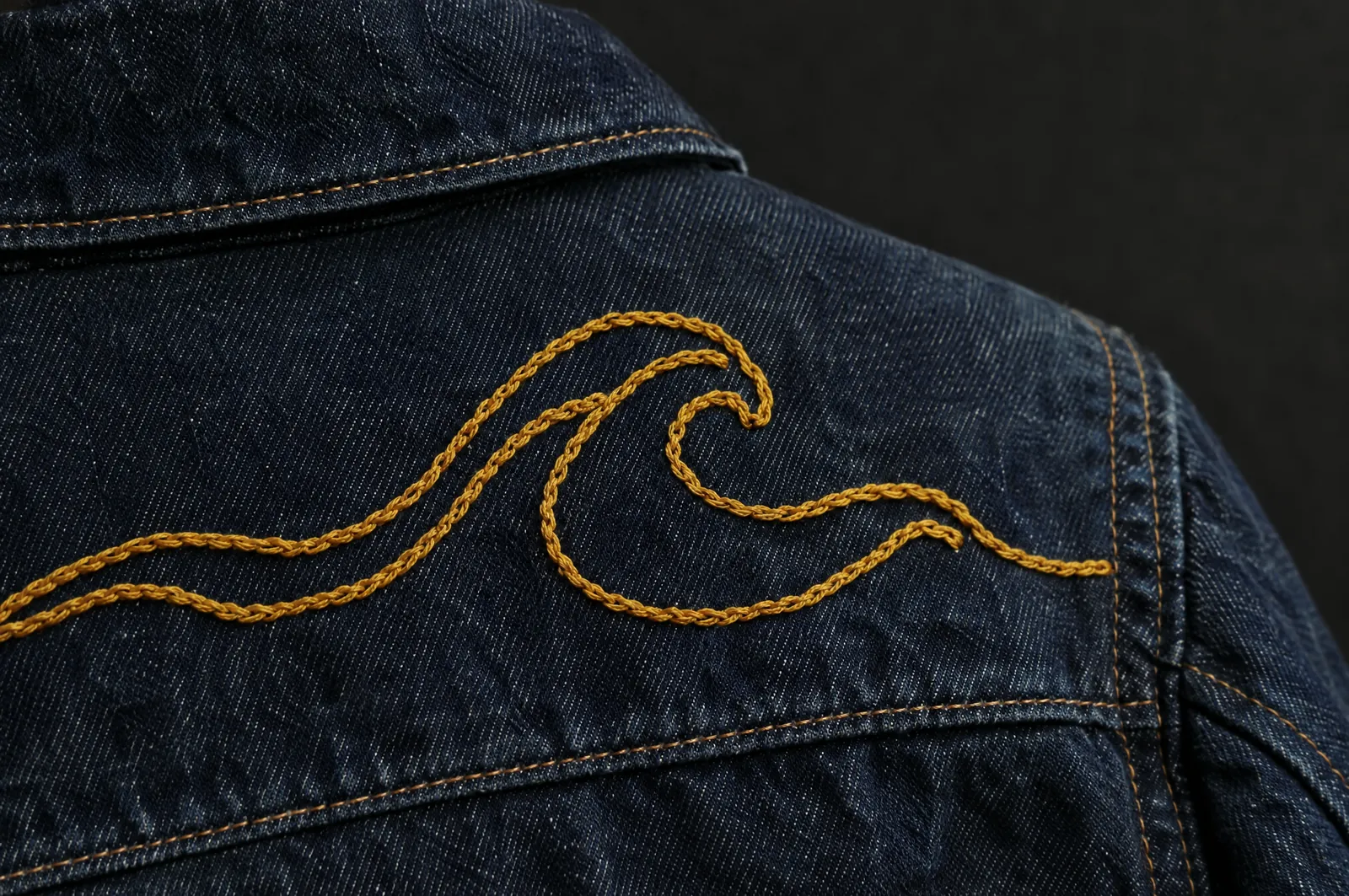
Embroidery made with a chain stitch, in one continuous line of loops. It gives a vintage look, like a work or bowling jacket.
- Use it when
- Names, signatures, script lettering and line drawings on jackets, shirts and collection pieces.
- Skip it when
- Large filled areas or high volumes on a tight deadline: it is slower than flat embroidery.
- Garments and fabrics
- Denim, gabardine, jackets, shirts and heavyweight sweatshirts.
- Colors
- Few; it works by thread color.
- Hand feel
- A soft relief with a chain texture.
- Durability and care
- Durable. Wash inside out, cold; do not iron over it.
Chenille
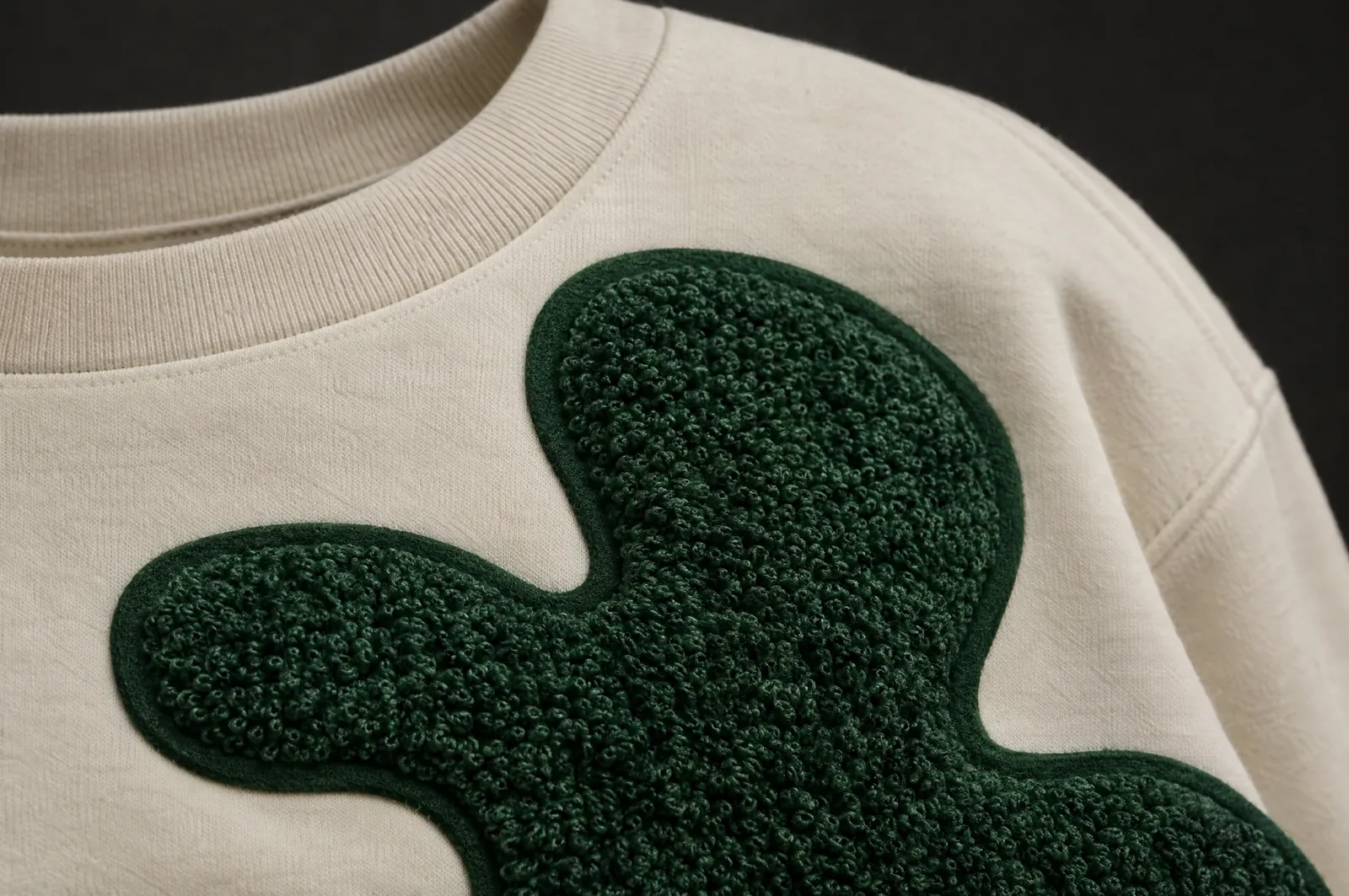
Looped embroidery that forms a spongy, towel-like surface. It is the lettering of varsity jackets.
- Use it when
- Large, bold letters and logos with a collegiate or retro look.
- Skip it when
- Small designs or fine detail.
- Garments and fabrics
- Heavyweight sweatshirts, hoodies, jackets, caps and beanies. It works at medium and large sizes, and very often as a patch.
- Colors
- Few, usually 1 to 3 plus an outline.
- Hand feel
- Very spongy, with relief.
- Durability and care
- Good; the loops can snag. Wash inside out, by hand or on a delicate cycle, no dryer.
Appliqué
We cut a piece of fabric (felt, twill, faux leather) in the shape of the design and sew it onto the garment with an embroidered outline.
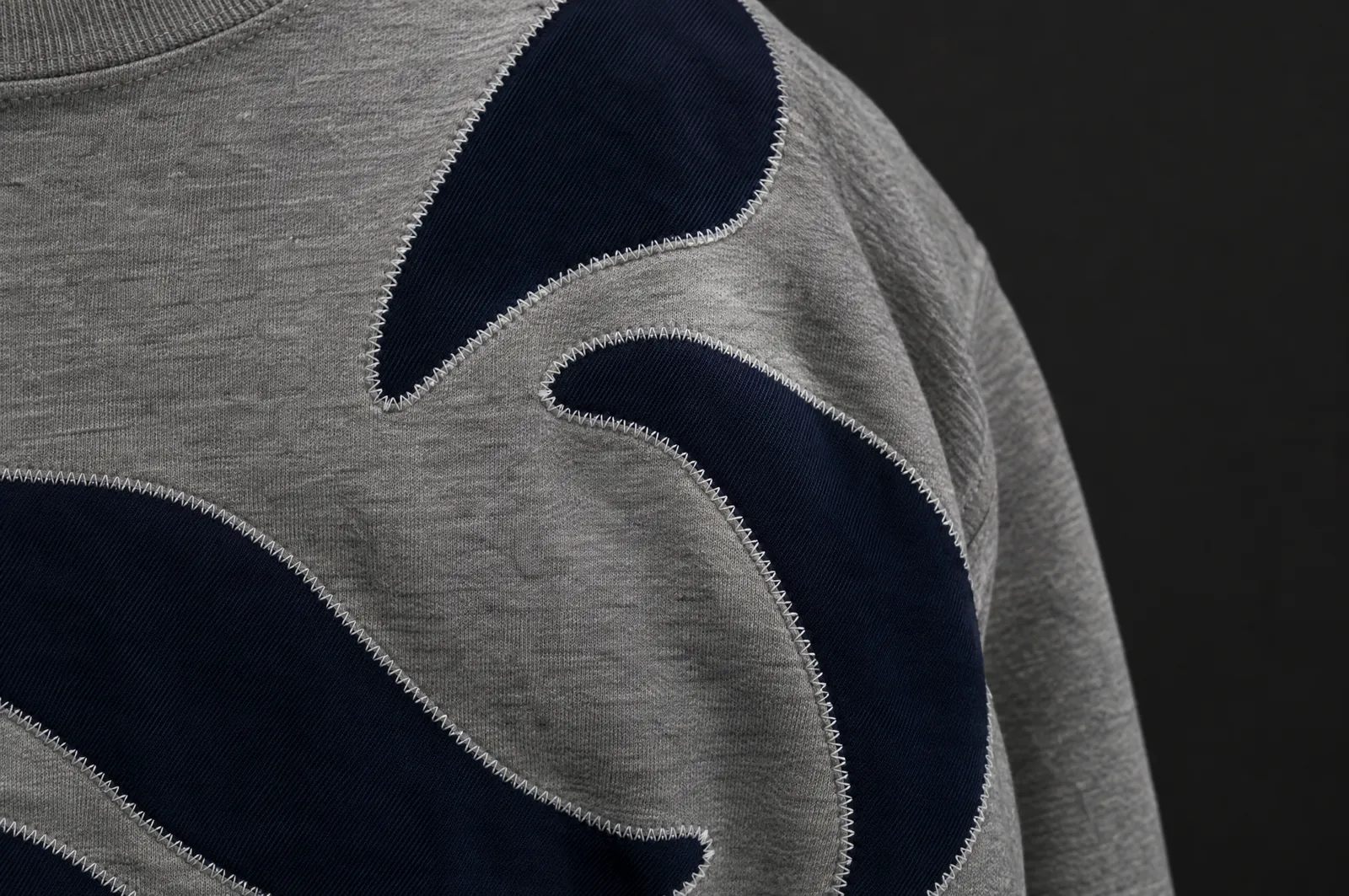
- Use it when
- Large letters and numbers, logos with big areas of color and a collegiate or athletic look. It weighs less than embroidering the whole area.
- Skip it when
- Fine detail or small lettering.
- Garments and fabrics
- Sweatshirts, hoodies, jackets and jerseys. It is the embroidery technique that handles large sizes best.
- Colors
- One per fabric, plus the outline thread.
- Hand feel
- Flat with raised edges; you can feel the appliqué fabric.
- Durability and care
- Durable. Wash inside out, cold.
FAQ
Can I embroider my logo exactly as it is?
Almost always, but very fine details sometimes need simplifying. We show you the digitized file on the mockup and on the sample.
Does any logo work in 3D?
No. It works with bold strokes; if your logo is thin, we suggest 3D on one part and flat on the rest.
How is it different from regular embroidery?
The stitch is a continuous chain, not side-by-side stitches. It looks more handmade and is used mostly for line work and lettering.
Chenille direct or as a patch?
As a patch is most common: it is embroidered separately and sewn on. Directly on the garment depends on the workshop's machine.
Why appliqué instead of a full fill?
Because on large areas a full embroidery fill gets heavy and stiffens the garment. Appliqué gives the same color with fewer stitches.
Tell us what you want to make.
Garments, quantities per style, the technique you have in mind and your date. With that we tell you what fits and quote firm.