Manufacturing
Garments for merch and brand clothing
What each garment is, what it is for, which fabric and which techniques decorate it.
- 2 routes
- A stock garment we decorate, or your own cut and sew.
- 100 pieces
- Minimum per style, confirmed by garment and technique.
- Tech sheet
- Fabric, weight, measurements by size, decoration and labeling, before the sample.
- Your size run
- You sign off the size run before production.
Two routes.
The weights on this page are industry guidelines; the actual weight is set in the tech sheet.
- Stock garment: a plain base garment we decorate. It is what we use for tour merch and express.
- Cut and sew: we develop fabric, pattern and trims for your brand. It is the premium line; see Clothing for brands.
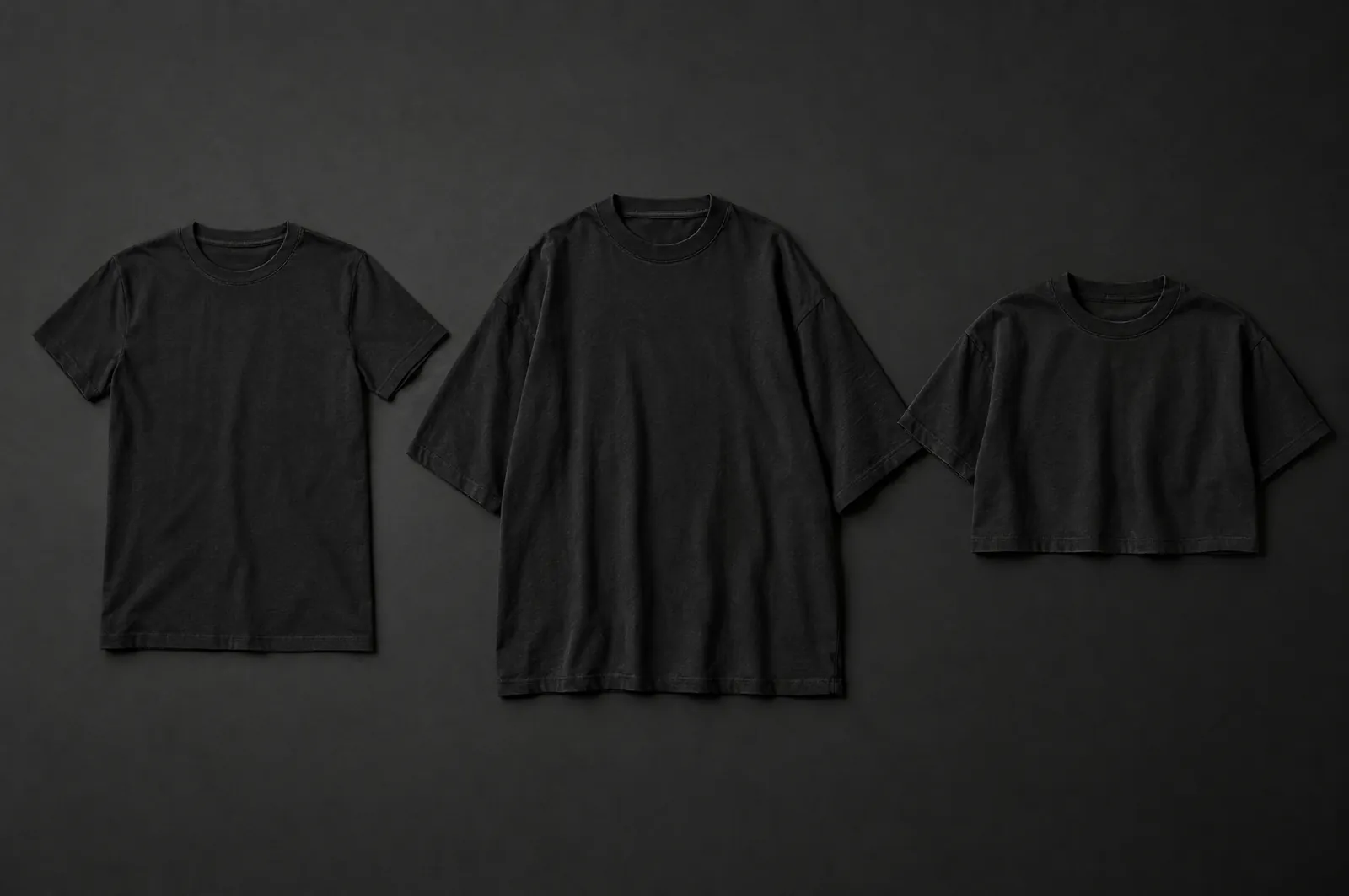
Regular fit tee
The classic merch tee: shoulder seam in place, hip length, straight drape.
- What for
- Tour merch, launches and volume. It is the best-selling garment.
- Fabrics and weight
- Combed cotton jersey or blends; lightweight 140 to 160 g/m², midweight 170 to 200 g/m².
- Techniques
- All screen-printing techniques, DTF, DTG, vinyl and small chest embroidery.
Oversized tee
Wider and longer than the regular fit, with the shoulder dropped toward the arm.
- What for
- Streetwear and artist brands. It reads as more premium.
- Fabrics and weight
- Heavyweight jersey, 220 to 260 g/m² or more.
- Techniques
- Screen printing (specialty inks included), DTF, embroidery and appliqué.
Boxy tee
A square cut: wide but short in length, with a dropped shoulder.
- What for
- Clothing brands and drops with a current silhouette.
- Fabrics and weight
- Heavyweight jersey, 220 to 260 g/m² or more, so the square shape holds.
- Techniques
- Screen printing, DTF, embroidery and patches.
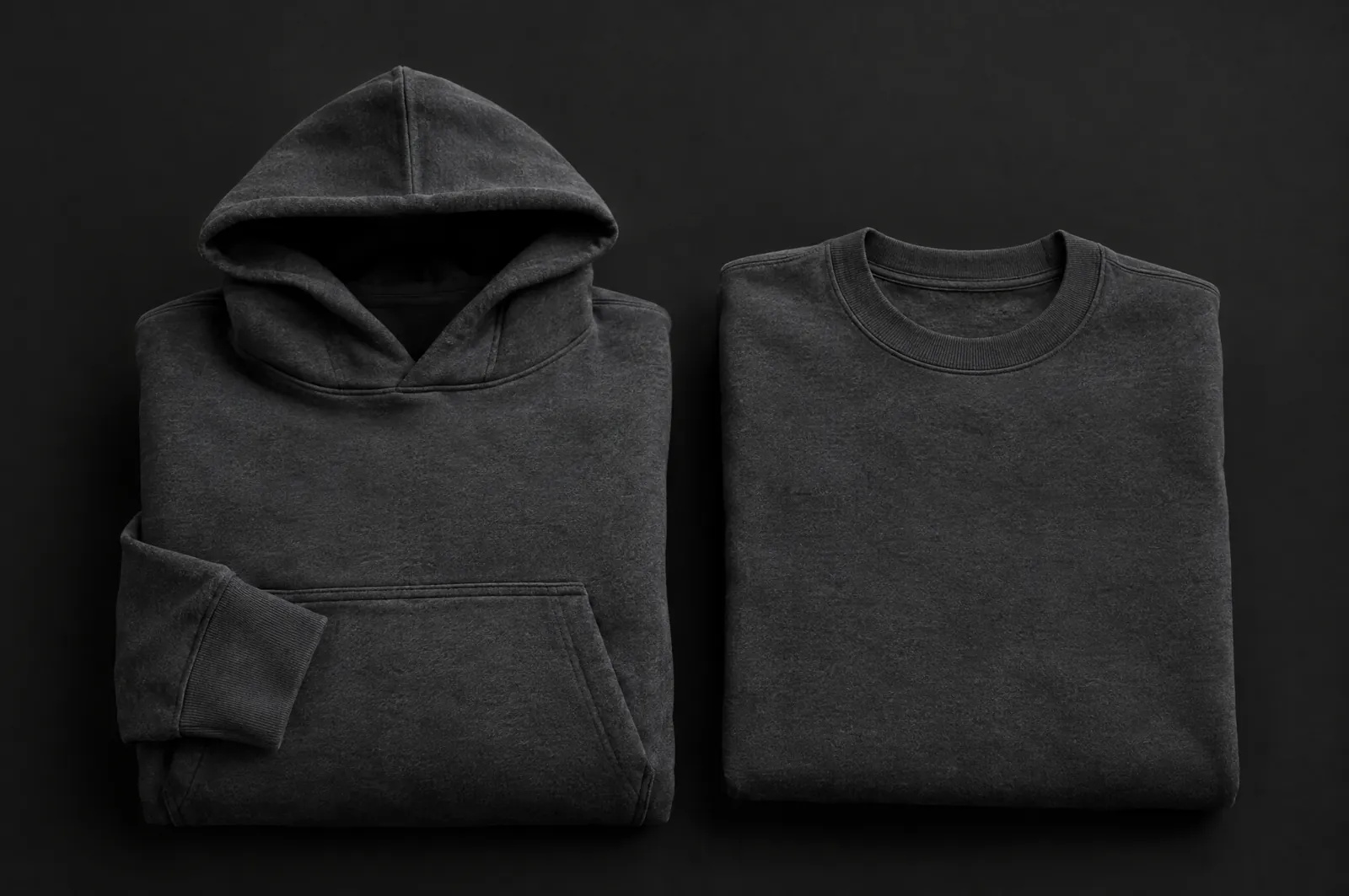
Hoodie
A hooded sweatshirt, usually with a kangaroo pocket on the front.
- What for
- Cold-season tour merch and clothing brands; it is the second best-selling merch garment.
- Fabrics and weight
- French terry or fleece, 280 to 400 g/m². Rib cuffs and hem.
- Techniques
- Screen printing, DTF, embroidery, chenille, appliqué and patches.
Crewneck
A sweatshirt without a hood, with a round rib collar.
- What for
- Clothing brands, collegiate or retro collections and tour merch.
- Fabrics and weight
- French terry or fleece, 280 to 400 g/m².
- Techniques
- Screen printing, DTF, embroidery, chenille and appliqué.
Joggers
Pants with an ankle cuff and an elastic waistband with drawcord.
- What for
- Sets with a sweatshirt, clothing brands and loungewear.
- Fabrics and weight
- French terry or fleece, 280 to 350 g/m².
- Techniques
- Screen printing on the leg, small embroidery and patches.
Jackets
Outerwear: coach jacket, bomber, varsity, denim or windbreaker.
- What for
- Collection pieces, tour crew gear and limited editions.
- Fabrics and weight
- It depends on the model: nylon, gabardine, denim, wool with faux leather. Defined per project.
- Techniques
- Embroidery, chain-stitch, chenille, appliqué, patches, screen printing and laser engraving on denim.
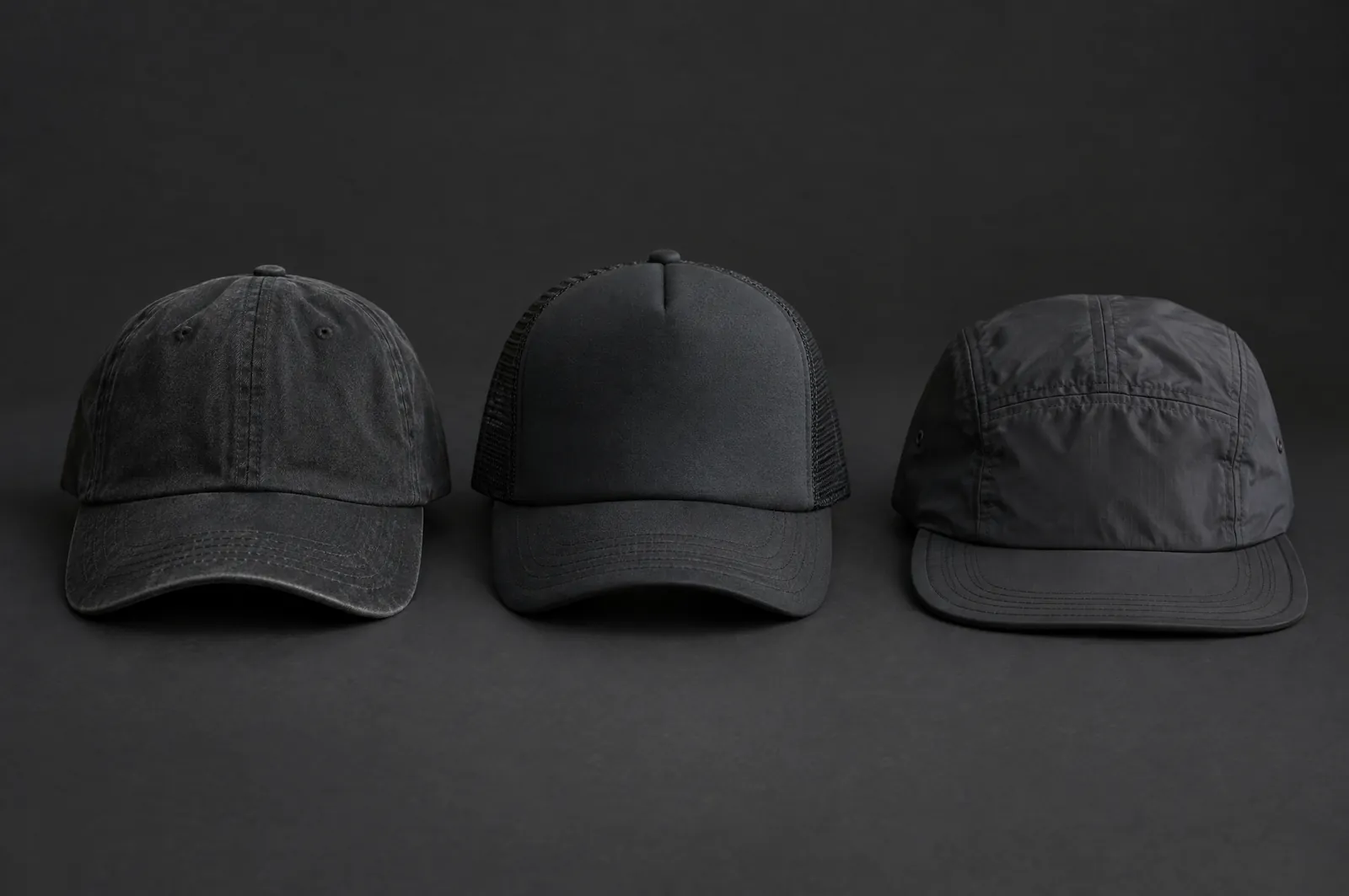
Dad hat
An unstructured six-panel cap (soft front), with a curved visor and back strap.
- What for
- Tour merch and clothing brands; small, understated logos.
- Fabrics and weight
- Cotton twill or gabardine, washed or unwashed.
- Techniques
- Flat embroidery and patches. On a soft front, 3D embroidery does not look the same.
Trucker cap
A cap with a foam or fabric front and a mesh back, with a snap closure.
- What for
- Tour merch, retro looks and festivals.
- Fabrics and weight
- Foam or twill front and polyester mesh.
- Techniques
- Flat or 3D embroidery, patches and transfers on a foam front.
5-panel cap
A five-panel cap with a one-piece front and no center seam, with a flat or semi-curved visor.
- What for
- Streetwear and skate or artist brands.
- Fabrics and weight
- Nylon, cotton or corduroy.
- Techniques
- Flat embroidery, woven or leather patches and transfers. The seamless front leaves a clean area.
Beanie
A knit hat, cuffed or uncuffed.
- What for
- Winter merch, cold-season tours and a collection add-on.
- Fabrics and weight
- Acrylic, cotton or wool blends.
- Techniques
- Flat embroidery on the cuff; woven, leather or PVC patches; a sewn-on woven label.
Tote bag
A fabric bag with handles.
- What for
- Tour and brand merch; it sells well and gets seen on the street.
- Fabrics and weight
- Cotton canvas or muslin, 270 to 400 g/m².
- Techniques
- Screen printing, DTF, embroidery and patches.
Socks
Knit socks, short or long.
- What for
- A collection add-on and merch with collection margin.
- Fabrics and weight
- Cotton with polyamide and elastane.
- Techniques
- Design knitted into the sock (jacquard) or sublimation on polyester socks.
Accessories
Small pieces that round out the collection: bandanas, bags, fabric keychains, loose patches.
- What for
- An entry price point for merch and cross-selling at the table.
- Fabrics and weight
- Depends on the piece.
- Techniques
- Depends on the piece: sublimation, screen printing, embroidery and patches.
Cut and sew
We do not start from a stock garment: we develop your brand's fabric, pattern and trims and make the garment from scratch.
- What for
- Clothing brands with their own identity and drops: it is the premium line. Also made-to-measure stage pieces.
- How it works
- Fabric development (color lab dip, weight and finish testing), pattern making, two or more sample rounds (proto, fit and final sample) and production by drop. It takes longer than tour merch and has no express version.
- Timeline
- Confirmed per collection before signing.
FAQ
What fabric weight should I choose for a merch tee?
For tour merch, 170 to 200 g/m²: it holds the print well and does not feel thin.
Should an oversized tee be ordered a size down?
It depends on the size chart. We send you the measurements by size so you can decide the size run.
Are boxy and oversized the same?
No. Both are wide, but the boxy is short and the oversized is long.
Can you print over the kangaroo pocket?
Yes, but the pocket seam interrupts the print. We mark it on the mockup so you can decide.
Crewneck or hoodie?
The crewneck looks cleaner and leaves more room on the chest; the hoodie sells more as tour merch.
Can you make the set in the same fabric as the sweatshirt?
Yes, and it is a good idea: that way color and weight match. We define it in the tech sheet.
Do you make varsity jackets?
Yes, as a cut-and-sew development, on the premium line calendar.
Can you do 3D embroidery on a dad hat?
You can, but it looks better on a structured-front cap. We show you the difference on the sample.
Can you print on the mesh?
Not with a good result. We decorate the front.
Why a 5-panel instead of a 6-panel?
Because the front without a center seam leaves clean space for a patch or a wide embroidery.
How big can the print be on a tote?
It depends on the bag size; on a standard tote, around 30 × 30 cm. We confirm it on the actual tote.
Is the sock design printed or knitted?
Knitted is the most durable and the most premium. Printed (sublimated) only on polyester socks.
Do you make things that are not clothing?
We make textile accessories. Anything non-textile is quoted separately per project.
Can I bring my own tech pack?
Yes. We review it field by field and, before quoting, tell you in writing what is missing. It does not replace the physical sample.
Tell us what you want to make.
Garments, quantities per style, the technique you have in mind and your date. With that we tell you what fits and quote firm.