Techniques
Digital printing: DTF, DTG and sublimation
Full color without a screen per ink. Each needs a different fabric: DTF almost any, DTG cotton and sublimation light polyester.
- 100 pieces
- Minimum per style, confirmed by garment and technique.
- Full color
- Photos and gradients with no charge per extra color.
- 300 dpi
- File resolution at actual print size.
- Express
- Of these three, only DTF qualifies for express.
What applies to all of them.
File, color and acceptance criteria.
- The file goes as a PNG at 300 dpi at actual size, with a transparent background and no white edges or stray shadows.
- Digital color approximates your brand color; it does not match a Pantone the way screen printing does. You approve it on the sample.
- Acceptance criteria: color within tolerance of the approved proof, no cracks when stretched and placement within ±0.5 cm of the tech sheet.
Whatever the technique, you approve two things before production: the artwork on a mockup and a physical sample. The full process is in How we work.
DTF (Direct to Film)
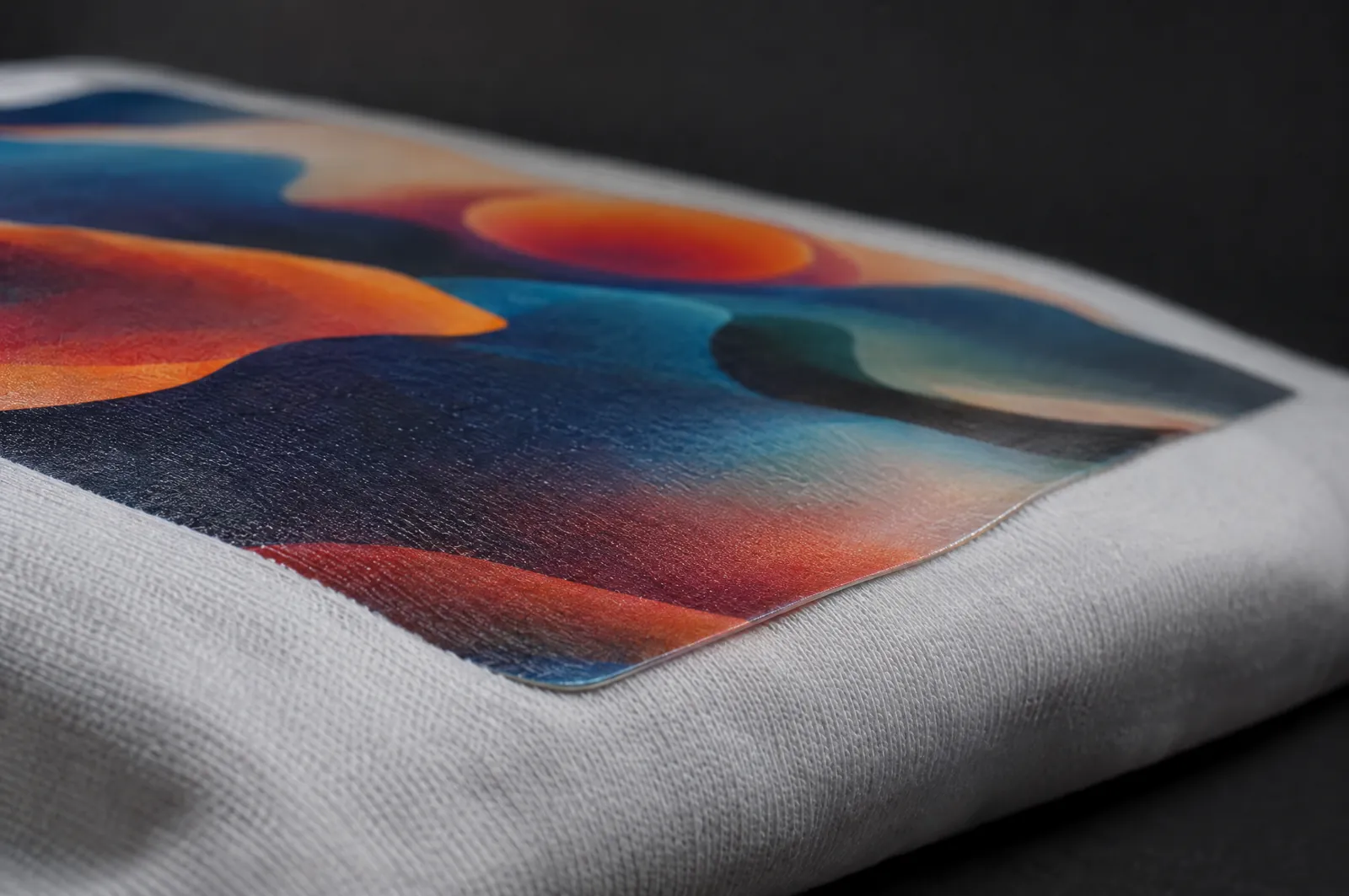
We print the design in full color on a film, add an adhesive powder and press it onto the garment with heat. It works like a high-resolution textile decal.
- Use it when
- Full-color or gradient designs in short runs or with many variants, fabrics screen printing does not grip well, or tight timelines: it qualifies for express.
- Skip it when
- Large solid areas that should feel soft, or when you want the hand of an ink inside the fiber.
- Garments and fabrics
- Cotton, polyester, blends and many technical fabrics. Also caps, totes and pieces with seams.
- Colors
- Full color, no charge per extra color. White included.
- Hand feel
- A thin, flexible, slightly plastic layer. More noticeable in large areas.
- Durability and care
- Good when applied at the right temperature and pressure. Wash inside out, cold; do not iron over it; no hot dryer.
DTG (Direct to Garment)
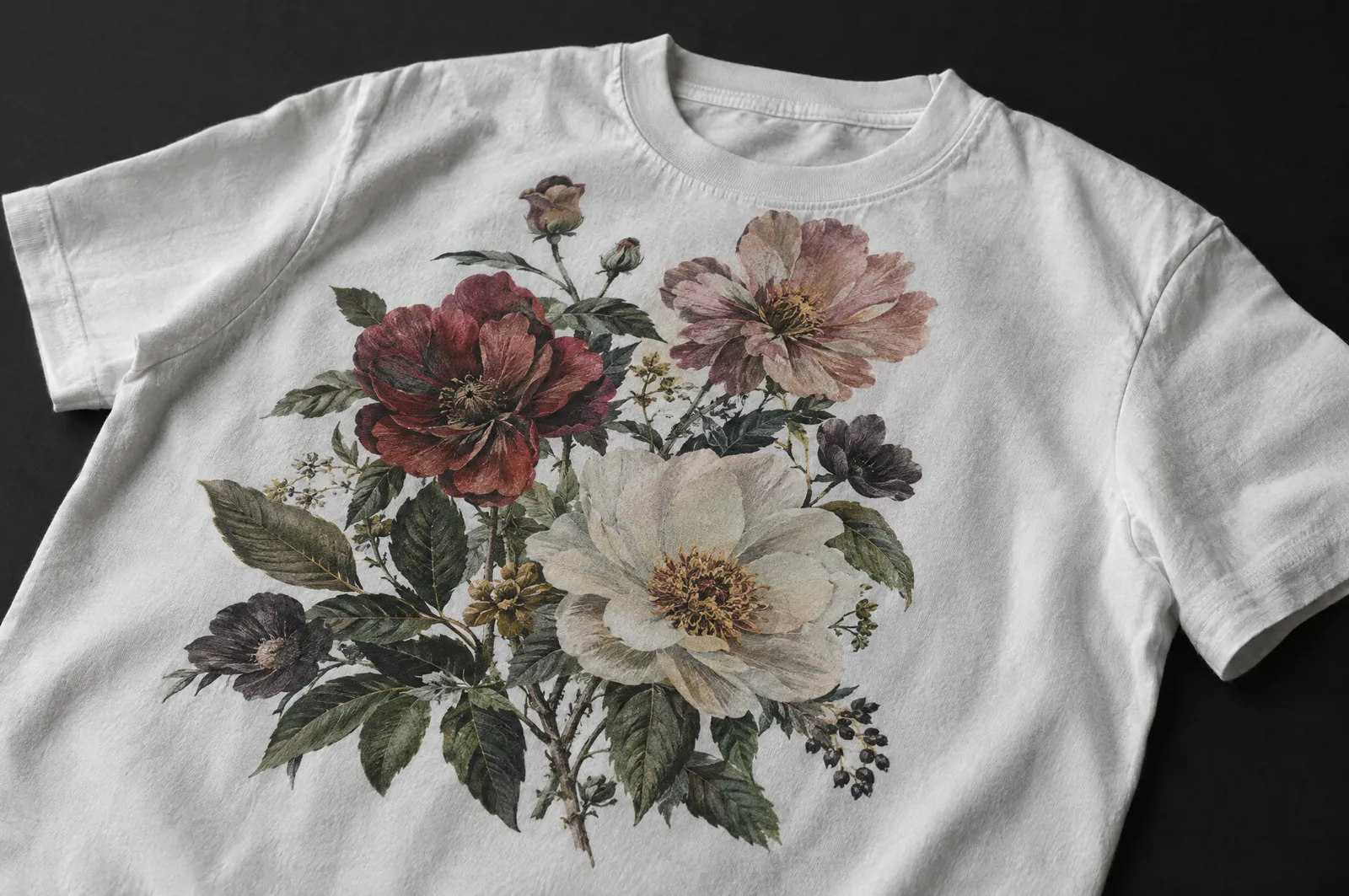
An inkjet printer prints straight onto the garment, like a paper printer but for fabric. On dark garments a pretreatment and a white layer go down first.
- Use it when
- Highly detailed photos and illustrations on cotton, with no screen costs.
- Skip it when
- The fabric is polyester or a high-synthetic blend, or you need an exact brand color: digital color approximates, it does not match a Pantone the way screen printing does.
- Garments and fabrics
- Best on 100% combed cotton: cotton tees, sweatshirts and totes.
- Colors
- Full color.
- Hand feel
- Soft on light garments; a little more body on dark garments because of the white layer.
- Durability and care
- Good; colors fade somewhat after many washes. Wash inside out, cold, no hot dryer.
Sublimation
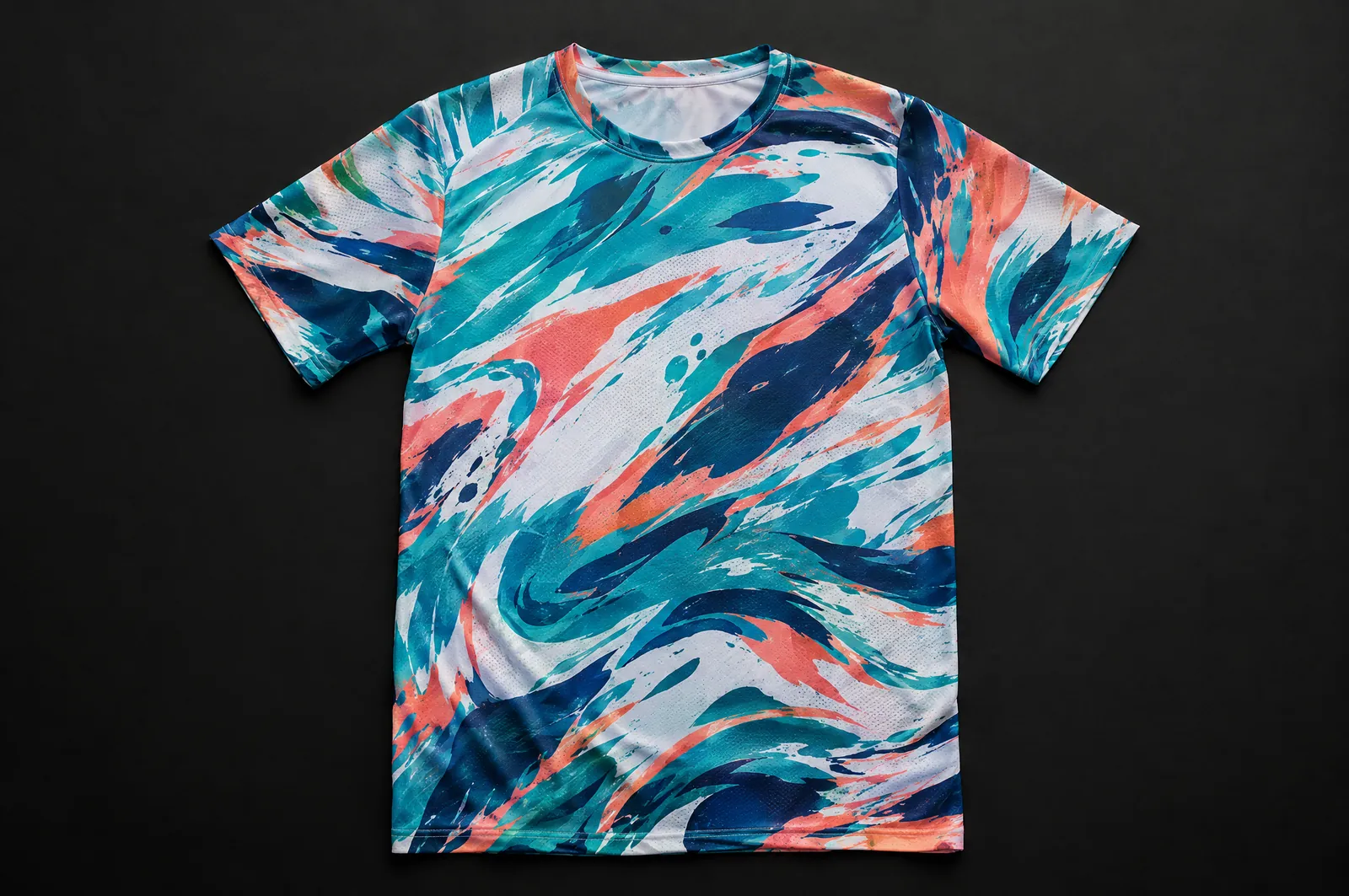
We print the design on paper with special inks and, with heat, the ink turns into a gas and bonds into the polyester fiber. The color lives inside the fabric.
- Use it when
- Sports jerseys, all-over prints and vivid colors on light polyester.
- Skip it when
- The garment is cotton or dark: sublimation does not take on cotton and cannot print white.
- Garments and fabrics
- Polyester or majority-polyester blends, in white or light colors. Full all-over garments are made through cut and sew.
- Colors
- Full color, no white.
- Hand feel
- None: there is no layer.
- Durability and care
- Permanent; it does not crack or peel. Avoid ironing directly at very high heat.
FAQ
DTF or screen printing?
Screen printing for a few flat colors and volume; DTF for full color, many variants or difficult fabrics. See the full comparison in the guide “Screen printing, DTF or embroidery?”.
What resolution does a DTG file need?
300 dpi at actual print size, as a PNG with a transparent background. It is all in the artwork guidelines.
Can you sublimate a cotton tee?
Not with a good result. Sublimation needs polyester; for cotton we use screen printing, DTF or DTG.
Tell us what you want to make.
Garments, quantities per style, the technique you have in mind and your date. With that we tell you what fits and quote firm.