Guides
How to send your artwork for production
A two-minute read. With this we prepare the mockup, tech sheet and sample without back and forth.
- 2 rounds
- Of changes per design, included. On express, one.
- 300 dpi
- Photos and illustrations at actual print size.
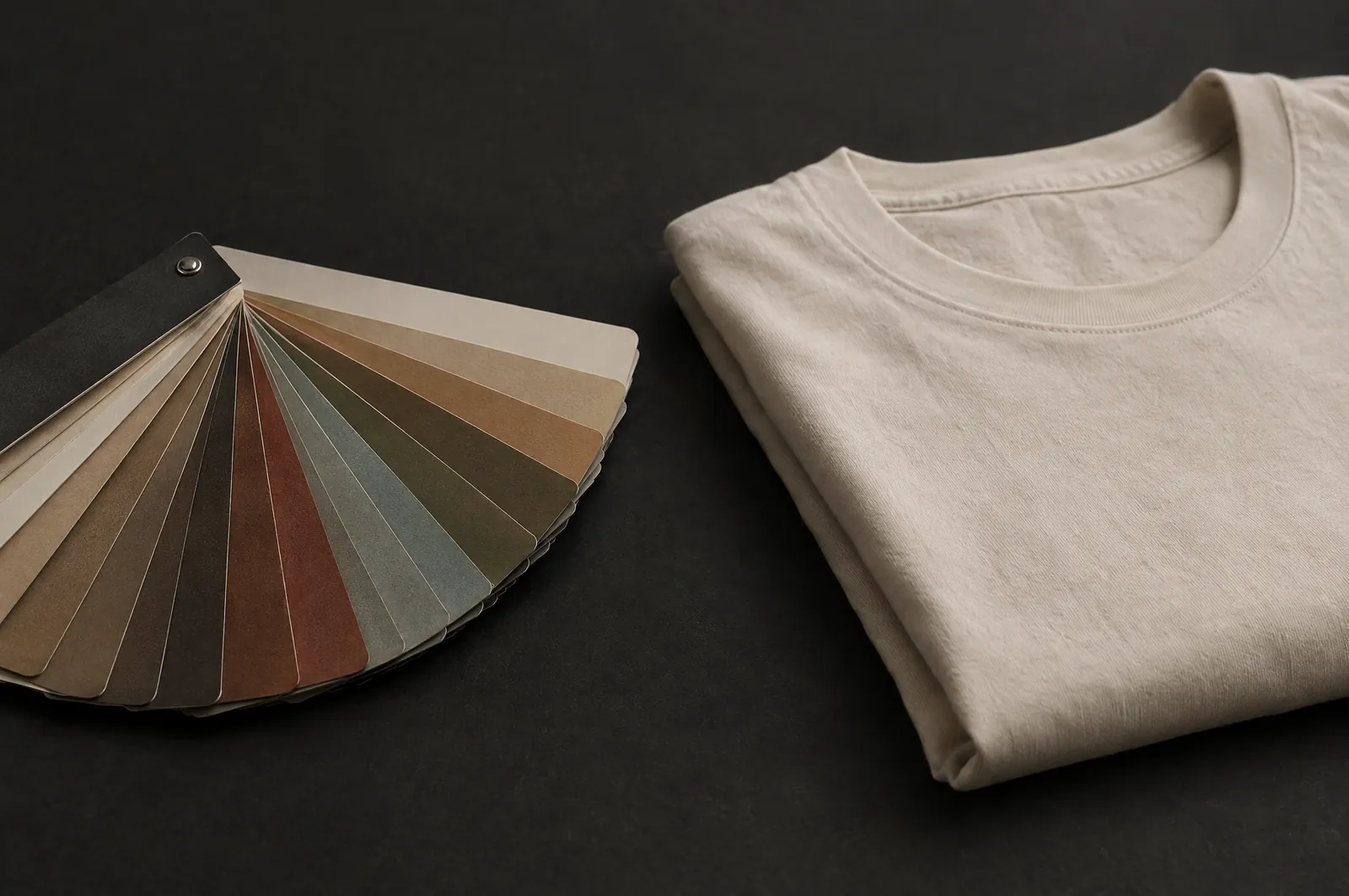
- C and TCX
- Pantone C for inks, Pantone TCX for fabric.
- 1 approver
- One person on your side, with authority to decide.
The minimum.
With this we prepare the mockup, tech sheet and sample without back and forth.
Logos and artwork in vector: AI, PDF or SVG, with text converted to outlines.
Photos and painted illustrations at high resolution: PNG or PSD at 300 dpi at actual print size, with a transparent background, and permission to use each photo.
Colors in Pantone: C (coated) for inks and print, TCX for fabric color.
Brand guidelines: typefaces, colors and prohibited uses.
Placement and size you have in mind for each design. See Print placement and sizes.
Formats by technique.
| Technique | Best format | Notes |
|---|---|---|
| Screen printing (flat colors) | Vector (AI, PDF, SVG) | One Pantone C color per ink. No gradients, or gradients designed for halftones. |
| Simulated process / CMYK | PSD or PNG at 300 dpi at actual size | We do the color separations. |
| DTF, DTG, sublimation | PNG at 300 dpi at actual size, transparent background | No white edges or stray shadows around it. |
| Embroidery and patches | Vector | Simplify details under 1 mm and lettering under 5 mm tall (industry rule). |
| Vinyl, flock, foil | Vector, by color | Closed shapes, no loose strokes. |
| Laser engraving | Vector, single color | The final tone comes from the material. |
Color separations.
In screen printing, each color is a screen.
- Separating means splitting the artwork into one layer per ink. If your artwork already comes in layers by Pantone, even better. If not, we separate it and show you on the mockup.
- On dark garments we almost always add a white underbase. You do not have to draw it.
- We also prepare the halftones for gradients.
The mockup you will approve.
One per design.
- The artwork on the real garment, in the garment's real color.
- The Pantones for each ink or thread.
- The technique.
- Placement and size (width × height, in cm), with the measurement it is placed from.
- A unique design name, the same one used on the tech sheet, the order and the delivery.
Mind the screen. The color on your screen is not the same as ink on fabric. What you approve for color is the Pantone; the real garment you approve later on the physical sample. They are two approvals and neither replaces the other.
Rounds of changes.
- Two rounds of changes per design are included.
- The third is a written change request: it moves the date and the cost.
- On express, a single round is included.
- One person on your side approves, with name, email and authority to decide. Approvals from anyone else do not count.
- A signed form, an electronic signature, or an email or message from the approver saying “Approved” in reply to the form all count as approval.
If your artwork is not finished.
You can come with references and the artist's or brand's identity. Tell us whether you need creative development, adaptation for production or just manufacturing of an agreed design. It is explained in Capabilities.
Checklist before you send.
- Vector files with text converted to outlines.
- Photos at 300 dpi at actual size.
- Pantone C (ink) and TCX (fabric).
- Placement and size for each design.
- A name for each design.
- Name and email of the approver.
- Permission to use the brand, photos and typefaces.
FAQ
Will a JPG I downloaded from Instagram work?
Not for production: it is low resolution and compressed. It works as a reference; for production we need the vector or the original high-resolution file.
Tell us what you want to make.
Garments, quantities per style, the technique you have in mind and your date. With that we tell you what fits and quote firm.