Techniques
Vinyl, flock, foil and screen-printed transfers
Four techniques applied with a heat press. They work for piece-by-piece personalization, for textures and shine, and for spots where direct printing does not reach.
- 100 pieces
- Minimum per style, confirmed by garment and technique.
- 1 to 3 colors
- Typical for vinyl, flock and foil: each color is a layer.
- Heat
- All four are applied with a heat press: do not iron over them.
- No express
- Only screen printing or DTF qualify for express.
Before you choose.
What the four have in common.
- They work with closed shapes and flat colors; the artwork goes as vector, separated by color.
- Acceptance criteria: color within tolerance of the approved Pantone or proof, no cracks when stretched and placement within ±0.5 cm of the tech sheet.
- They are the techniques most sensitive to a hot dryer. Wash inside out and cold.
Whatever the technique, you approve two things before production: the artwork on a mockup and a physical sample. The full process is in How we work.
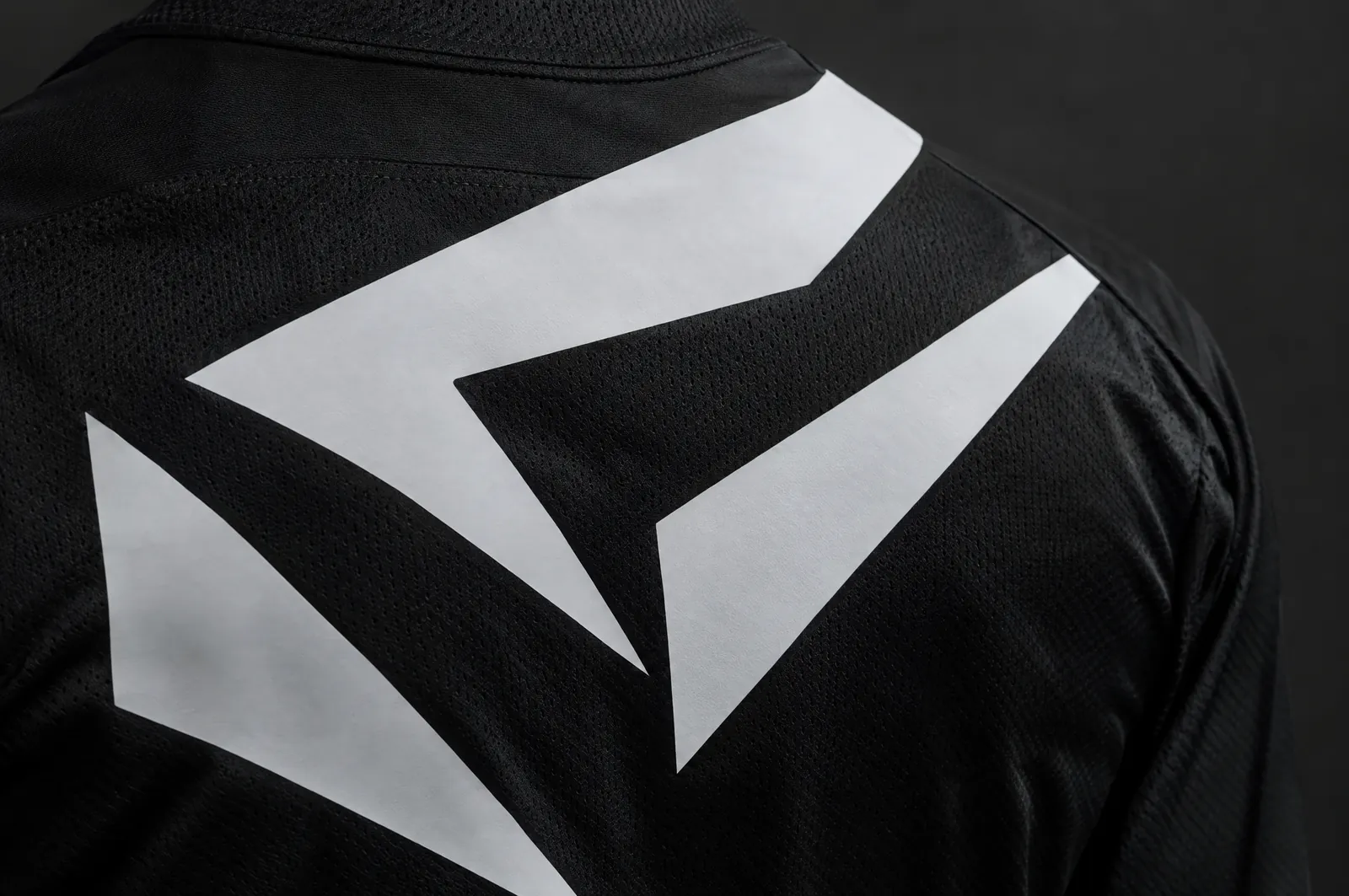
Heat transfer vinyl
A sheet of colored vinyl cut on a plotter; the excess is weeded out and the design is pressed on with heat.
- Use it when
- Names, numbers and 1 to 3 flat-color designs, especially when each piece carries different text.
- Skip it when
- Fine detail, gradients or many colors, or large areas.
- Garments and fabrics
- Cotton, polyester and blends.
- Colors
- Usually 1 to 3, because each color is a layer.
- Hand feel
- A smooth, somewhat stiff layer.
- Durability and care
- Good. Wash inside out, cold; do not iron over it.
Flock
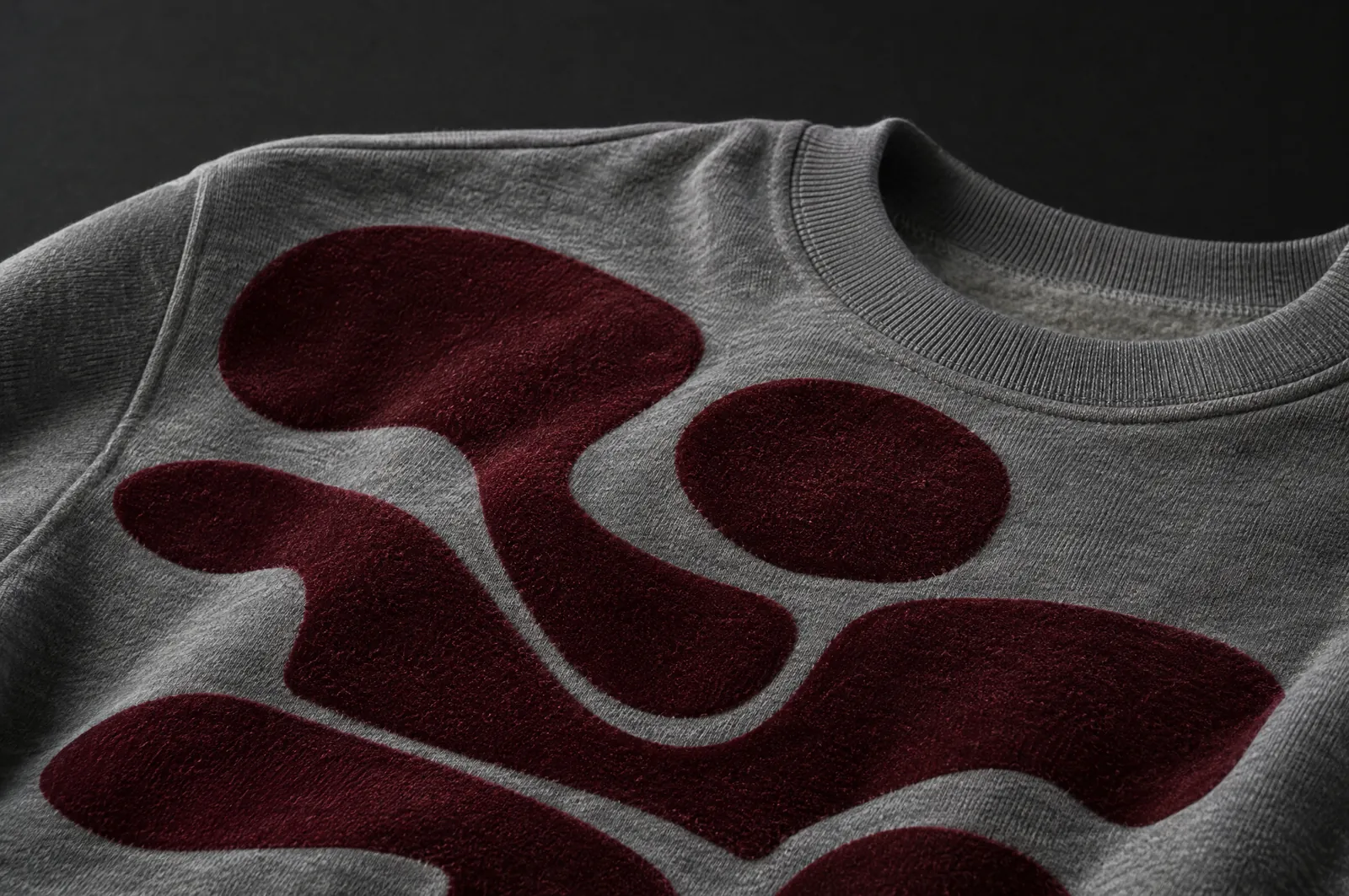
A vinyl or transfer with a surface of short fibers that gives a velvety texture.
- Use it when
- Logos and lettering with a retro or collegiate look, textured details.
- Skip it when
- Fine detail or very large areas.
- Garments and fabrics
- Cotton, polyester and blends.
- Colors
- Usually 1 or 2.
- Hand feel
- Soft and fuzzy, with a light relief.
- Durability and care
- Good; the pile wears with friction. Wash inside out, cold, no dryer.
Foil
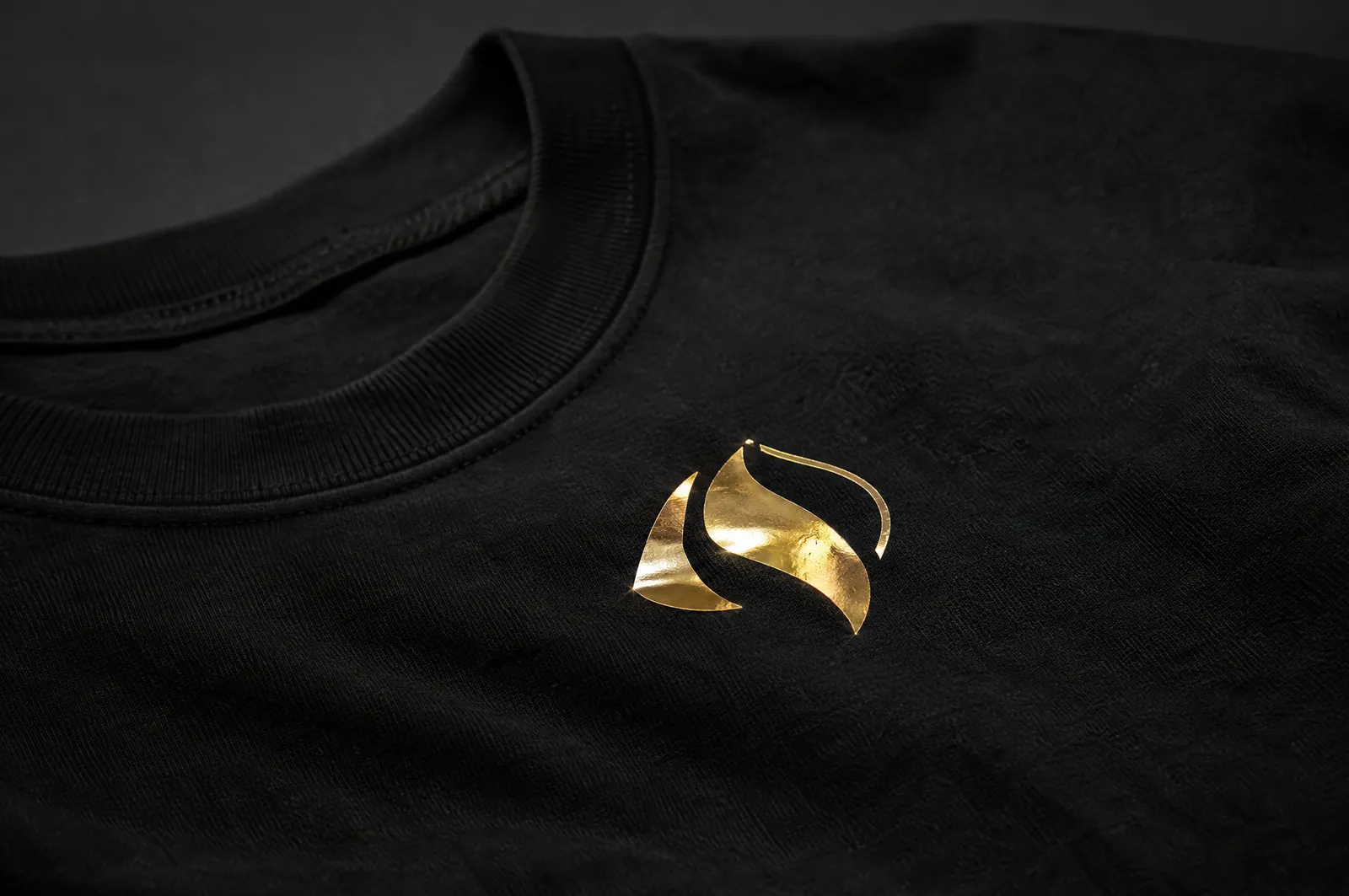
A metallic film bonded with heat onto a printed adhesive. It gives a mirror shine: gold, silver or holographic.
- Use it when
- Special editions and luxury details where the shine is the hero.
- Skip it when
- The garment will be worn and washed a lot: foil is the most delicate technique in the wash.
- Garments and fabrics
- Cotton and blends; also as an accent over screen printing. It works best in small and medium areas.
- Colors
- One foil color per application.
- Hand feel
- Smooth and thin.
- Durability and care
- Lower than other techniques: it dulls and flakes with washing and friction. Hand wash or wash inside out, cold, no dryer, no ironing.
Screen-printed transfer
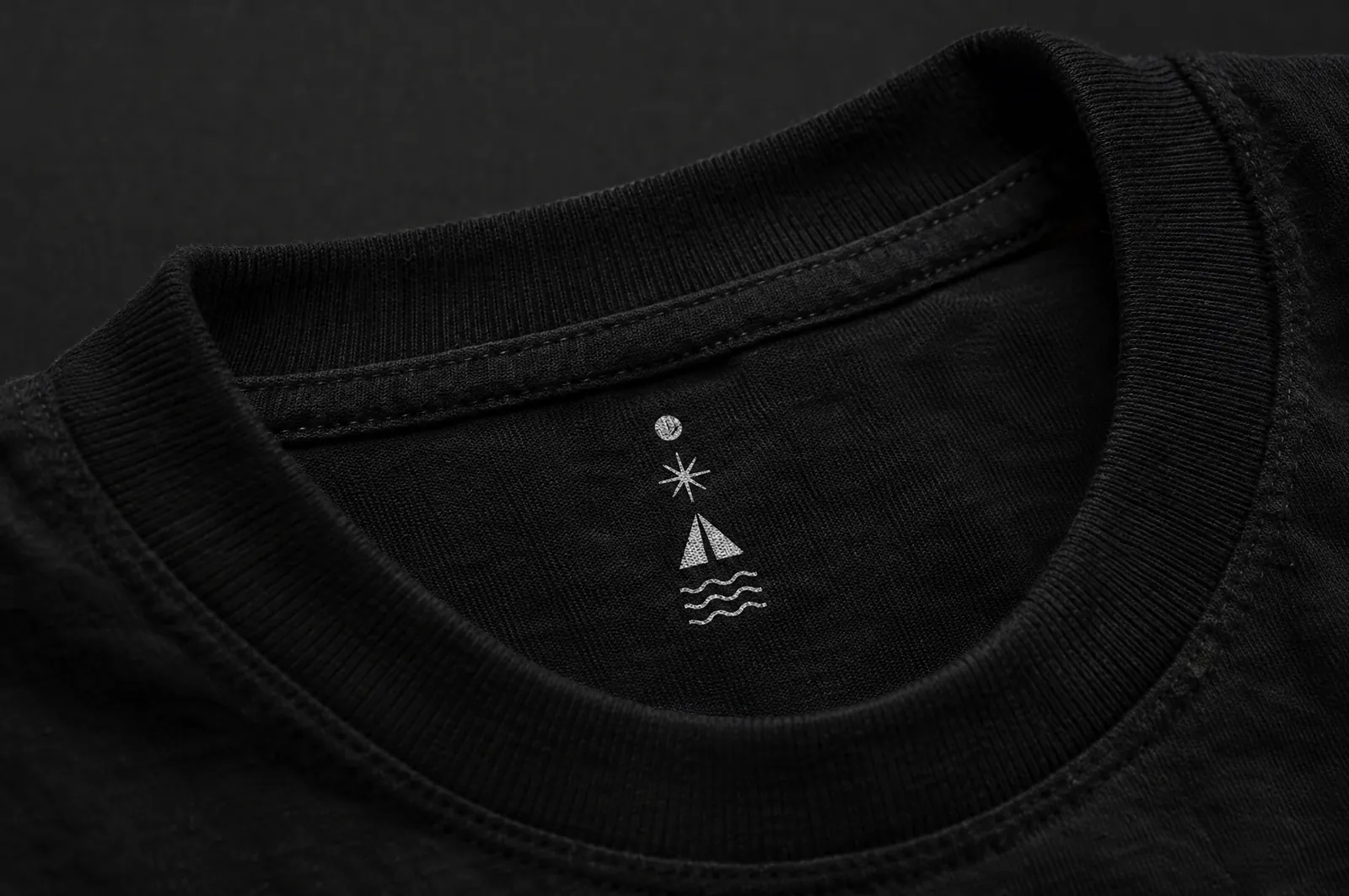
We screen print the design onto a special paper and then apply it to the garment with heat. It combines the quality of screen-printing ink with the ease of a heat press.
- Use it when
- Areas that are hard to print directly (caps, back of the neck, sleeves, pieces already sewn), printed neck labels, or the same logo across many different garments.
- Skip it when
- Large areas that should feel soft.
- Garments and fabrics
- Cotton, polyester and blends; caps and accessories.
- Colors
- Several flat colors.
- Hand feel
- A thin layer, similar to plastisol.
- Durability and care
- Good. Wash inside out, cold.
FAQ
Can I put a different name on each tee?
Yes. For individual names and numbers, vinyl is the most practical option; send us the list by size.
Does flock feel like velvet?
Yes, that is the point. We send you photos and video of the texture on the sample.
Does foil survive the washing machine?
It does with care (inside out, cold), but it is the technique that wears the most. If the garment is for daily wear, we will suggest metallic ink instead.
Can it replace the neck tag with my own printed label?
Yes. It is one of the most common ways to make a printed neck label. See the labels page.
Tell us what you want to make.
Garments, quantities per style, the technique you have in mind and your date. With that we tell you what fits and quote firm.